John 12:40
Another candidate for repentance in the FG occurs in John 12:40 with the Evangelist’s use of strefo. The FG paraphrases Isaiah saying, “He has blinded their eyes and He hardened their heart, so that they would not see with their eyes and perceive with their heart, and be converted (or turn back) and I heal them.” This text (which is closer to the Hebrew than the LXX) from Isa 6:10 (also quoted in Matt 13:13–15; Mark 4:11–12; 8:17–18; Luke 8:10; 19:42; Acts 28:26–27), while it could be understood as referring back to the rejection described in 1:11, is better understood in the immediate context of 12:36–39, 41–42. Craig Evans rightly concludes that John 12 functions “to explain how a messianic claimant who performs one messianic sign after another finds himself rejected and crucified.” The context in Isaiah 6 is that after Isaiah had a vision which resulted in his “repentance and cleansing” (Carson, John, 448), he offers to serve the Lord saying, “Here I am.” God informs Isaiah of the response he will receive from the people. What is God saying to Isaiah? Keener notes that “Later rabbis emphasized the note of repentance” in this text. Most all scholarly research on repentance has connected the underlying Hebrew word used in Isa 6:10 (shub) with the concept of the definition of repentance presented in this research: that of turning away from sin. The Greek word used here, strefo, means to turn.[1] It is the word the LXX used for repentance.
The paraphrase in 12:40 is connected to the quote in 12:38. The main theme connecting them is the question of why the Jews did not believe; but they also contain themes of being lifted up, glory, and sin. The aspect of their unbelief addressed is that of hardening (obduracy), which is essentially the opposite of repenting.
The author of the FG has taken some liberties in his citation of Isa 6:10: he emphasizes the blinding of eyes and hardening of hearts, and changes (from the LXX) the passive (“has become hardened”) to the active (“He blinded”). This change presents the peoples hardness as regrettable. The Hebrew uses an imperative: “Make the heart of this people.” He has not included the “deafness” mentioned in Isa 6:10. Goodwin concludes that the text that the Evangelist was using was, nonetheless, the LXX.
Part 2 will discuss two major ways of viewing this passage and the implications for repentance in the FG.
Footnote
[1] In the LXX, the word used is epistrefo; the Hebrew word is shub. For shub meaning “repent,” see 1 Kgs 8:47; 2 Chron 6:37; Psa 7:12; Jer 5:3; 8:4; 15:7, 19; 18:8; 31:19; 34:15; Ezek 14:6; 18:30, 32; Hos 11:5; Zec 1:6; Job 36:10; Isa 30:15; 59:20. Regarding strefo, Brown (John, 1: 484) says that it “really has the sense of a middle voice: ‘turn themselves.’” Anderson, “Repentance,” 19, concludes that in Isa 6:10 it must refer to an external turning, not an internal. Therefore, turning from sins would then be the fruit of repentance and believing. His definition: “an internal resolve to turn from one’s sins.”
Monday, May 15, 2006


Sunday, May 14, 2006
Repentance found in the phrase "Stop Sinning"
John 5:14; 8:11
Two passages exist where Jesus tells an individual not to sin: 5:14 and 8:11. In 8:11, the woman caught in adultery is told to go and sin no more. While an analysis on how this phrase may be linked to repentance could be convincing (and I think it is), because I don't accept this text as an original part of the text of the FG, it would be inappropriate to utilize it for the current purposes (for support, see a recent work giving solid evidence for the spuriousness of this text: William L. Peterson, “OUDE EGO [KATA]KRINO. John 8:11, The Protevangelium IACOBI, and The History of the Pericope Adulterae,” in Sayings of Jesus: Canonical and Non-Canonical: Essays in Honour of Tjitze Baarda, eds. Willaim L. Peterson, Johan S. Vos, and Henk J. De Jonge (New York: Brill, 1997), 191–221.
However, the text in 5:14 does not pose the same textual problems. While the connection between the sin and the disease may be unclear, Jesus’ words about what he is supposed to do are not. Jesus’ words have been translated in two ways: “stop sinning” and “do not continue sinning any longer” which essentially mean the same. Grammatically, some have assumed that a present imperative that is prohibitive must be understood as “stop” doing something. However, while “that may be the correct interpretation in this instance, … there are too many exceptions to this grammatical ‘rule’ to base the interpretation on the present tense" (see Carson, John, 246, n. 1). Carson points out that the present imperative is used to stress urgency (as compared to an aorist imperative). Therefore, this is essentially an injunction to repent. Jesus is telling him to change his ways, turn his life around, and turn to God. The command to “stop sinning” is conceptually equivalent to “turn away from sin.” The narrative about the man who received sight in chapter 9 may be viewed in contrast to the lame man in chapter 5: while the blind man is viewed positively, the lame man is portrayed negatively. As the pericope closes, the reader is left viewing the lame man as unbelieving. Yet, Jesus confronts one who does not believe with these words: “stop sinning.” The context is salvific, not of progressive sanctification. The conclusions by some that calling for unbelievers to turn from their sin is adding works to the gospel is seriously questioned by this verse. It is fascinating that in the discussions on repentance in the FG, no one was found who raised this verse as a possibility.
Two passages exist where Jesus tells an individual not to sin: 5:14 and 8:11. In 8:11, the woman caught in adultery is told to go and sin no more. While an analysis on how this phrase may be linked to repentance could be convincing (and I think it is), because I don't accept this text as an original part of the text of the FG, it would be inappropriate to utilize it for the current purposes (for support, see a recent work giving solid evidence for the spuriousness of this text: William L. Peterson, “OUDE EGO [KATA]KRINO. John 8:11, The Protevangelium IACOBI, and The History of the Pericope Adulterae,” in Sayings of Jesus: Canonical and Non-Canonical: Essays in Honour of Tjitze Baarda, eds. Willaim L. Peterson, Johan S. Vos, and Henk J. De Jonge (New York: Brill, 1997), 191–221.
However, the text in 5:14 does not pose the same textual problems. While the connection between the sin and the disease may be unclear, Jesus’ words about what he is supposed to do are not. Jesus’ words have been translated in two ways: “stop sinning” and “do not continue sinning any longer” which essentially mean the same. Grammatically, some have assumed that a present imperative that is prohibitive must be understood as “stop” doing something. However, while “that may be the correct interpretation in this instance, … there are too many exceptions to this grammatical ‘rule’ to base the interpretation on the present tense" (see Carson, John, 246, n. 1). Carson points out that the present imperative is used to stress urgency (as compared to an aorist imperative). Therefore, this is essentially an injunction to repent. Jesus is telling him to change his ways, turn his life around, and turn to God. The command to “stop sinning” is conceptually equivalent to “turn away from sin.” The narrative about the man who received sight in chapter 9 may be viewed in contrast to the lame man in chapter 5: while the blind man is viewed positively, the lame man is portrayed negatively. As the pericope closes, the reader is left viewing the lame man as unbelieving. Yet, Jesus confronts one who does not believe with these words: “stop sinning.” The context is salvific, not of progressive sanctification. The conclusions by some that calling for unbelievers to turn from their sin is adding works to the gospel is seriously questioned by this verse. It is fascinating that in the discussions on repentance in the FG, no one was found who raised this verse as a possibility.
Friday, May 12, 2006
Belief and Obedience
John 3:36
The inclusion of a discussion on 3:36 is based primarily on three reasons: (1) the relationship between believing and obedience has been controversial; (2) the relationship is significant for understanding believing; and (3) the lack of attention given to this verse in relationship to this discussion.
The primary purpose of this verse is twofold: (1) unbelief is shown by disobedience; and (2) a contrast in the results of each. The verb apeitheo is in an antonymous relationship to pisteuo. Obedience is presented as a natural result of one who believes. Therefore, the Evangelist’s portrayal of people’s belief can be known by their actions of obedience or disobedience to Jesus. Part of our understanding of repentance relates to this: one aspect of repentance is the changing of one’s actions to line up with God’s Word. This is what obedience is, also. Therefore, while obedience and repentance are not synonyms, nor nearly synonymous, obedience in 3:36 is a result of belief and it is also a result of repentance.
Similarly, Riddlebarger (“Faith,” 104) says that “one who has exercised faith in Christ, and is united to Christ by that faith, will repent and will struggle to obey and yield. But these things are not conditions for nor component parts of faith itself. They are fruits of saving faith. They are the inevitable activity of the new nature.”
Wednesday, May 10, 2006
REPENTANCE FOUND!!!
Light and Darkness Motif: 3:19–21; 8:12; 9:5
The main passage to discuss for the light and darkness motif is 3:19–21. It was very convenient for Bing (“John’s Gospel,” 4) to consider 3:14–15, but not mention 3:16–21. While 1:4–9 uses similar terms to 3:19–21, this latter passage can be distinguished since light and darkness in John 3 “have clear moral connotations” (so Köstenberger).
3:19–21 comes at the end of the Nicodemus narrative with the Evangelist reflecting upon believing in Jesus, which leads to eternal life. Jesus is the Light who has come into the world so that people could have eternal life, rather than judgment. However, people love darkness. Why? Because by staying in darkness the evil deeds that they practice can stay hidden. They did not want their life to be examined and shown wanting; they did not want to cease from these deeds. This reflection by the Evangelist tells why Nicodemus’ belief was inadequate, and consequently, why those in 2:23–25 had an unacceptable faith: men love the darkness rather than the light. Rather than coming to the Light (Jesus), they flee from it so they do not have their sins exposed. The word elegxo refers to “not only exposure but shame and conviction” (Carson, John, 207). The Evangelist continues (3:20) by saying that those who refuse the Light actually hate the Light. This is followed by a contrast with those who “practice the truth.” These one’s do not flee from the Light because their life is full of deeds “worked in God.” The comparison is between those who believe in Jesus and those who do not. The description of those who believe is that they are obedient, abiding, and following the commands of Christ (thereby loving Him). The description of those who do not believe is that they have refused to turn from their evil ways: this is a description of those who have refused to repent. They do not turn from their sins and turn to God in belief. Therefore, one who believes is characterized as having turned from their evil ways and is living a life where their deeds are “accomplished in God.”
This passage is paradigmatic for the concept “believing” in the FG. Whenever the concept of believing is discussed, readers of the FG would (at least from this point on) understand that one who believes is one who has changed his life, been radically transformed. Also, future passages that refer to light (8:12; 9:5) should be viewed alongside this passage: Jesus, as the light of the world, causes people to choose sides. Some walk in darkness and are judged; others do not walk in darkness and possess eternal life.
A verse that may not seem connected on the surface to believing and the motif of light and darkness is 16:9. While the FG describes sin in 15:21–25, it is now explicitly defined in 16:9 as unbelief: Bultmann aptly notes: “The world reacts to Jesus by clinging on to itself, by menein en te skotia.” In 16:9, the problematic elegxo occurs: “in every instance the verb has to do with showing someone his sin, usually as a summons to repentance” (Carson, John, 537). Therefore, to convict the world is shaming it and attempting to persuade it of its guiltiness, and in this way “calling it to repentance” (ibid.). The goal of the Holy Spirit is to convince the world that it is guilty in sin so that it will turn to God and stop sinning. Repentance is always turning from sin; the FG defines sin as unbelief. Therefore, when one is said to believe, they have repented from the unbelief, the sin. The concept of repentance in the FG is turning away from unbelief.
When a character in the FG is portrayed (positively) as believing, there is always a description of action in the context to communicate to the reader what Johannine belief demands of one who responds to Jesus. Those who are portrayed negatively are not described as having these actions; therefore, their response of belief is less than what Jesus was demanding. John 3:19–21 connects the ideas of believing and moral actions. Those who do not believe have their “moral actions” described as “evil deeds.” Those who believe have ceased from doing “evil deeds” and now are doing works “wrought in God.” They have turned away from their sinful lives; in John 3 terminology, they are now born from above, born of water and spirit. They have been cleansed and have a new heart; this has been evidenced by their changed life (see Ezek 36:27). These words are reminiscent of John the Baptist’s preaching in Matthew 3: “bring about fruit worthy of repentance.” Those who the FG describes as pisteon are also described as having a changed life (not just mind). No one is portrayed positively as believing when this component is missing. Therefore, the concept of repentance has now been located in the Fourth Gospel. Any challenges?
Tuesday, May 09, 2006
The Snake in the Wilderness
John 3:14–15 and Numbers 21:4–9
The primary connection being made between John and Numbers is the lifting up of the serpent to the lifting up of Jesus. Secondarily, as the Israelites were to turn to the serpent to preserve (physical) life, people are called upon to believe in Jesus for eternal life. In Num 21:4–5, the sin of the Israelites is referenced. 21:6 relays the consequence of that sin (serpents attacking and killing the Israelites). 21:7 becomes very significant as the people came to Moses and said: “We have sinned, because we have spoken against the LORD and you; intercede with the LORD, that He may remove the serpents from us.” This verse describes the repentance of the Israelites from their sin. In response, God told Moses to place a serpent upon a bronze pole and whoever looked at it would not die. Therefore, the connection between Numbers and the FG is two-fold. Primarily, the author of the FG is discussing Jesus’ lifting up (which Nicodemus probably did not understand until sometime after the crucifixion). Secondarily, just as the Israelites “looked” at the serpent and were given life, so belief in Jesus gives life. However, Numbers 21 portrayed the Israelites as repenting, turning from their sin, and then “‘looking’ in faith.” While the background of Ezekiel 36 proposed for John 3:3–5 was not a direct reference, this background is a direct reference. While Bing has examined the idea of “looking,” he failed to examine the context of the passage and its OT background.
For reference to Bing, see:
Bing, Charles C. “The Condition for Salvation in John’s Gospel.” Journal of the Grace Evangelical Society 9, no. 16 (1996): 25–36.
Monday, May 08, 2006
Sunday, May 07, 2006
John 3:3-5: Born Again or Born From Above ...
 Jesus informs Nicodemus that he must be gennethe anothen. The first problem is the meaning of anothen: is it “again” or “from above”? The occurrence of this same word in 3:31 with the unquestioned meaning “from above” quickly tilts the evidence in that direction. It also has that meaning in 19:11, 23. (Note that when some [i.e. Ridderbos and Hendriksen] go back to the underlying Aramaic the discussion quickly gets muddied.) So, what does the phrase “born from above” mean in this context? While the expression likely harkens the readers of the FG to think back to 1:12–13 (which it then would mean “born of God”), Jesus himself explains it again to Nicodemus in 3:5: to be born from above means to be born of water and spirit. While water has been interpreted as a reference to baptism, purification, and natural birth, when the background to this verse is seen as Ezek 36:25–27, an explanation becomes easier. The themes in the Ezekiel 36 passage are of cleansing (“sprinkle clean water … and you will be clean”) and a new spirit (“put a new spirit within you”). The result of this action that God will take is that the people will “walk in My statutes” and “observe My ordinances.” The whole passage is a call to repentance, to return to God, and a description of what God will do: “cleans(e) human hearts” and “inner transformation by his Spirit” (so Köstenberger, “John,” 35). In fact, according to Keener, “Qumran’s Manual of Discipline connects Ezek 36 with an immersion in conjunction with repentance (1QS 3.8–9).”
However, Ezekiel 36 is not quoted nor directly alluded to in John 3. Therefore, this (likely) background text should not be pressed too far. Regardless, enough exists in Jesus’ own words to formulate a conclusion: be born from above means to be born of water and spirit. To be born of water refers to being cleansed and being born of the spirit refers to the spirit that God will place in Christians. This “water-spirit” is the origin of the regeneration that is demanded. Both of these result in living a radically different life; they involve changing. Jesus is exhorting Nicodemus to change his life, not just his way of thinking, but all of himself. Hendriksen refers to being born from above as a “radical change,” and Morris as a “divine remaking.” Certainly, Carson’s understanding that this passage’s focus is on “the need for transformation” fits the current understanding as well. This is related to the concept of repentance, whereby someone is called to turn from their sins.
Summary of Parts 3-7
Part-way Summary
These five arguments are listed below in order of strongest argument to weakest:
(1) Lamb of God: 1:29
(2) Passages Referring to Hearing, Keeping, Perseverance, and Love
(3) John the Baptist and Baptism: 1:25ff 3:23 10:40
(4) The Stone Waterpots at the Wedding in Cana: John 2:1–12
(5) The Samaritan Woman: 4:16–18
The final two essentially contain no connection whatsoever to repentance; the first three may allude to repentance, but the exegetical ground was somewhat shaky.
Thursday, May 04, 2006
Repentance and the Fourth Gospel: Part 7
The Samaritan Woman: 4:16–18
Though the discussion on repentance in the FG has been extremely limited, when it was discussed this text was typically raised. Jesus is talking with a Samaritan woman and asks for her to go get her husband, knowing that she has had many husbands and the man she was now with was not her husband. While some may want to say that Jesus was calling for her to repent, that is, turn from her wicked ways, the text never says that. Jesus simply points out her sin (rather than ignoring it) and she counters by changing the subject rather quickly. Therefore, this passage does not contain the concept of repentance.
Wednesday, May 03, 2006
Repentance and the Fourth Gospel: Part 6
Passages Referring to Hearing, Keeping, Perseverance, and Love
Some passages in the FG discuss the relationship between hearing and believing (5:24),[1] keeping Jesus’ word and never seeing death (8:51), the concept of continuing to follow (8:31), and love and obedience (14:15, 21, 23–24). While these passages contain some hope for containing the concept of repentance, the last one (John 14) may be the closest. In 14:15, Jesus says that you show your love for him by obeying his commands. Therefore, obedience, which is (somehow) related to repentance, is a proof of genuine love. After 14:15 is restated in the first part of 14:21, Jesus continues and stresses the relationship between obedience and love. This is again reiterated in 14:23–24. This theme re-emerges in the account of Peter’s restoration (21:15–17, 19b). These verses strengthen the argument that love is tied to action, but they still fall short of containing the concept of repentance.[2]
Footnotes:
[1] Carson, John, 256, says that “Hearing in this context, as often elsewhere, includes belief and obedience.” Keener, John, 1:653, translates the word as “heed.” When “obey” is used, repentance is not necessarily in mind (cf. 8:55 “keep,” “obey”). But when a change is called for, and the result is obedience, then repentance is in mind. Bing, “John’s Gospel,” 4, says hearing means more than physical hearing, but means listening, as in “I hear you.” He never wrestles with whether or not the connotation of obedience is present.
[2] Bultmann is convinced that this passage does not portray him repenting: “Surely the denial and the repentance of Peter ought to have found mention! And nothing like an absolution is expressed in the statement of Jesus” (Bultmann, John, 712). Instead, he views this as Peter’s commission for the leadership of his current congregation. In 21:19, when Jesus calls Peter to follow him, it is a call to tell people to follow me (ibid., 712–13).
Tuesday, May 02, 2006
The Hardest NT Texts to Interpret
Surfing around the biblio blogosphere, I saw a comment by Michael Bird about Romans 7 being one of the hardest NT texts to interpret. That got me thinking: what are some of the hardest texts?
Romans 7 is surely difficult, but I'd place 1 Cor 15:29 ("baptized for the dead") as more puzzling. Also, 2 Thess 2:8 (restrainer), Luke 22:36 (why do they need a sword), Mark 16:16-18 (the teaching on baptism and snake handling ... if it's original which I don't think it is), John 1:16 ("grace upon grace"), 1 Cor 11:16 (is it a practice in the church or not), Romans 11:26 ("all Israel will be saved"), Matthew 16:18 (is Peter the rock), John 20:22 (Johannine Pentecost?), and 1 Pet 3:18-21. Also, the divorce texts can be very frustrating when attempting to apply them to real life church situations. Any others you'd like to add?
Also, how about passages that are frequently mutilated? Like lukewarm Christians in Revelation 3:15-16 or "stumbling block" theology (Rom 14; 1 Cor 8) or 1 Thess 5:22? Those are really not difficult passages, but they sure are mishandled a lot.
Romans 7 is surely difficult, but I'd place 1 Cor 15:29 ("baptized for the dead") as more puzzling. Also, 2 Thess 2:8 (restrainer), Luke 22:36 (why do they need a sword), Mark 16:16-18 (the teaching on baptism and snake handling ... if it's original which I don't think it is), John 1:16 ("grace upon grace"), 1 Cor 11:16 (is it a practice in the church or not), Romans 11:26 ("all Israel will be saved"), Matthew 16:18 (is Peter the rock), John 20:22 (Johannine Pentecost?), and 1 Pet 3:18-21. Also, the divorce texts can be very frustrating when attempting to apply them to real life church situations. Any others you'd like to add?
Also, how about passages that are frequently mutilated? Like lukewarm Christians in Revelation 3:15-16 or "stumbling block" theology (Rom 14; 1 Cor 8) or 1 Thess 5:22? Those are really not difficult passages, but they sure are mishandled a lot.
Repentance and the Fourth Gospel: Part 5
The Stone Waterpots at the Wedding in Cana: John 2:1–12
This passage describes Jesus’ first sign in Galilee. Why not just take the sign at face value and move on? In the Fourth Gospel, one has not truly “seen” the sign until one understands its significance. According to Brown, the focus of this passage is the “replacement of Jewish institutions and religious views” which points to “Jesus as the one sent by the Father to bring salvation to the world.” Bultmann describes the main significance of passage as communicating Jesus’ divinity as Revealer. The only way a connection to repentance could be made is by combining the idea of the Jewish ritual purifications with forgiveness; then connecting forgiveness to repentance. This, admittedly, appears to be a stretch in light of the conclusions just discussed. Also, Moloney finds essentially no significance in the purification rituals mentioned: “There is no need to link the purification mentioned here with any particular feast, or with rites before or after a meal.” Essentially, it is not what the story is about. Therefore, no connection to repentance should be emphasized.
Friday, April 28, 2006
Repentance and the Fourth Gospel: Part 4
Lamb of God: 1:29
When John the Baptist said, “Look! The Lamb of God who takes away the sin of the world,” does he insinuate the concept of repentance? The first problem with this verse is the expression “Lamb of God.” While it may refer to the apocalyptic lamb mentioned in Revelation 5 (Beasley-Murray, Dodd, Carson), or the Suffering Servant of Isaiah 53, it most likely is a reference to the Paschal lamb.
The connection to repentance can only be made if one understands the phrase “sin of the world” as a reference to forgiveness, and then points out the connection between repentance and forgiveness of sin in the NT (for example, see Mark 1:4; Luke 3:3; 17:3–4; 24:47; Acts 2:38; 5:31; 8:22). It should also be noted that there is one explicit mention of believing and forgiveness of sins in the NT: “everyone who believes in Him receives forgiveness of sins” (Acts 10:43). Evidence for “takes away” referring to forgiveness can be found in the LXX of 1 Sam 15:25 and 25:28 where the Greek verb (airo) refers to forgiveness. In this context, it could also take the meaning of “sin-bearing,” though this appears less likely. This text appears too distant from the concept of repentance to draw any strong conclusions.
Tuesday, April 25, 2006
Repentance and the Fourth Gospel: Part 3
John the Baptist and Baptism: 1:25ff 3:23 10:40
The author of the FG assumed some kind of knowledge of the general story about Jesus. This can be seen in a few places. In 1:40, Andrew is introduced to the reader as “Simon Peter’s brother.” However, Simon Peter has not yet been introduced; that occurs in the following verse (1:41). This does not necessitate a claim to Johannine literary dependence upon the Synoptics. Other examples are found at 3:24 (an analeptic reference to John the Baptist being thrown into prison); and 11:1–2 (an analeptic reference to Mary anointing Jesus’ feet). Therefore, familiarity with the general story about Jesus is assumed. It should also be mentioned that John the Baptist is always referred to as “John,” without the additional “the Baptist.” While this is frequently used to support evidence of apostolic authorship, it also demonstrates that the audience probably was already familiar with John (the Baptist’s) ministry.
If the above is true, and the emphasis of John’s ministry, as confirmed in the Synoptics, was repentance and baptism, then it may be the case that the author of the FG did not find it necessary to repeat much about John since knowledge about him was already assumed.
The words for “baptism” occur frequently with words for repentance in the NT (for example, see Matt 3:6–16; Mark 1:4–9; Luke 3:7–21; Acts 2:38–41; 8:12–38; 11:16; 19:3–5). In the FG, baptizo occurs thirteen times. The relationship of baptism to repentance may have been strong enough for the author of the FG to not find it necessary to make this link explicit.
Another connection, which could be made between John the Baptist and repentance, is the mention of “purification” in 3:25. While purification may refer to John’s baptism, Carson (more perceptively) connects this “purification” with the same word in 2:6 and thus Jewish purification rites are in mind. While more will be said about 2:6 later, Morris’ conclusion regarding this dispute is surely astute: “This verse is compressed to the point of obscurity.”
While the former text may allude (from a very distant perspective) to repentance, it surely is not strong enough to connect them tightly. The latter text does not meet the standards. Therefore, neither text adequately contain the concept of repentance.
Sunday, April 23, 2006
Repentance and the Fourth Gospel: Part 2
Possibilities
The following texts were identified as possibilities and examined to test their merits:
(1) References to John the Baptist and baptism: 1:25ff.; 3:23ff; 10:40.
(2) Jesus as the “Lamb of God who takes away the sin of the world”: 1:29.
(3) The Wedding at Cana: could the reference to the purification jars be a reference to repentance: 2:1–13.
(4) Born from above/anew and born of water and spirit: 3:3–7.
(5) The lifting up of the snake in the wilderness: 3:14 (see Num 21:4–9).
(6) Light and darkness motif throughout FG: 1:4–9; 3:19–21; 8:12; 9:5.
(7) The relationship of obedience and believing: 3:36.
(8) Jesus pointing out the Samaritan woman’s sinful life: 4:16–18.
(9) Jesus’ command to not sin: 5:14; 8:11.
(10) The motif of hearing and its relationship to obedience: 5:24; 12:47.
(11) The motif of “coming”: 5:40; 6:35.
(12) “die in sin”: 8:21.
(13) “continue to follow”: 8:31.
(14) obeying Jesus’ teaching equals never seeing death: 8:51; 17:6.
(15) “turn to me” from Isaiah: 12:40.
(16) obedience and love: 14:15, 21, 23–24.
(17) remain and bear fruit: 15:1–5.
(18) Peter’s restoration: 21:15–17, 19b.
(2) Jesus as the “Lamb of God who takes away the sin of the world”: 1:29.
(3) The Wedding at Cana: could the reference to the purification jars be a reference to repentance: 2:1–13.
(4) Born from above/anew and born of water and spirit: 3:3–7.
(5) The lifting up of the snake in the wilderness: 3:14 (see Num 21:4–9).
(6) Light and darkness motif throughout FG: 1:4–9; 3:19–21; 8:12; 9:5.
(7) The relationship of obedience and believing: 3:36.
(8) Jesus pointing out the Samaritan woman’s sinful life: 4:16–18.
(9) Jesus’ command to not sin: 5:14; 8:11.
(10) The motif of hearing and its relationship to obedience: 5:24; 12:47.
(11) The motif of “coming”: 5:40; 6:35.
(12) “die in sin”: 8:21.
(13) “continue to follow”: 8:31.
(14) obeying Jesus’ teaching equals never seeing death: 8:51; 17:6.
(15) “turn to me” from Isaiah: 12:40.
(16) obedience and love: 14:15, 21, 23–24.
(17) remain and bear fruit: 15:1–5.
(18) Peter’s restoration: 21:15–17, 19b.
The majority of these concepts and texts have not been analyzed in relationship to repentance in previous research. Some texts were found to provide no concrete evidence for the concept of repentance and others may provided only some weak evidence. The first group that will be discussed will include those texts that are not strong texts for repentance in the Fourth Gospel.
Saturday, April 22, 2006
Repentance and the Fourth Gospel: Part 1
Now that the concept of repentance has been discussed, does this concept occur in the Fourth Gospel? Before discussing specific passages the may (or may not) allude to this concept ... what is the significance of the underlying Greek words to repentance (metanoia and metanoeo) not occuring in the Fourth Gospel?
In order to provide a small amount of evidence to the proposition that because something is not explicitly stated that it is not communicated, some items will now be brought forth to show that this idea is incorrect. The virgin birth is not mentioned in the FG, but that does not mean that the author did not know about it or intentionally left it out because he disagreed with it. The word (noun form) “faith” is absent from the FG. Hell (hades, gehenna, tartaroo) is not mentioned in the FG. Regarding other NT books, the verb “to believe” is absent from Revelation, and the noun form only occurs four times. While the verb “to save” occurs in Matthew fifteen times, Jesus is never called Savior. Similarly, the verb “to save” occurs in Mark fourteen times and “salvation” occurs once, but Jesus is never called Savior. If the absence of a word means de facto that the author purposefully left it out and/or the concept is not present then:
(1) The concept of Jesus as Savior is absent from Matthew, Mark, Romans, Colossians, Hebrews, and Revelation;
(2) The concept of grace is absent from Matthew and Mark;
(3) The concept of salvation is absent (in noun form) from Matthew and completely in Colossians;
(4) The verb pisteuo does not occur in Colossians or Revelation and the noun pistis does not occur in the FG;
These conclusions are unwarranted: the absence of a word does not necessitate the absence of the concept. This out-dated linguistic mindset is what led to so many problem with the Theological Dictionary of the New Testament. The next post will list texts that may contain the concept of repentance in the Fourth Gospel.
In order to provide a small amount of evidence to the proposition that because something is not explicitly stated that it is not communicated, some items will now be brought forth to show that this idea is incorrect. The virgin birth is not mentioned in the FG, but that does not mean that the author did not know about it or intentionally left it out because he disagreed with it. The word (noun form) “faith” is absent from the FG. Hell (hades, gehenna, tartaroo) is not mentioned in the FG. Regarding other NT books, the verb “to believe” is absent from Revelation, and the noun form only occurs four times. While the verb “to save” occurs in Matthew fifteen times, Jesus is never called Savior. Similarly, the verb “to save” occurs in Mark fourteen times and “salvation” occurs once, but Jesus is never called Savior. If the absence of a word means de facto that the author purposefully left it out and/or the concept is not present then:
(1) The concept of Jesus as Savior is absent from Matthew, Mark, Romans, Colossians, Hebrews, and Revelation;
(2) The concept of grace is absent from Matthew and Mark;
(3) The concept of salvation is absent (in noun form) from Matthew and completely in Colossians;
(4) The verb pisteuo does not occur in Colossians or Revelation and the noun pistis does not occur in the FG;
These conclusions are unwarranted: the absence of a word does not necessitate the absence of the concept. This out-dated linguistic mindset is what led to so many problem with the Theological Dictionary of the New Testament. The next post will list texts that may contain the concept of repentance in the Fourth Gospel.
Thursday, April 20, 2006
The Gospel of Judas
Two interesting (and short) thoughts on the Gospel of Judas: the first by Craig A. Evans and the second by Andreas J. Kostenberger. Good reads!
The Meaning of Repentance: Conclusion
The three main views on the definition of metanoia are: (1) an actual turning away from one’s sins (not just a willingness or resolve to do so); (2) the intention, resolve, or willingness to turn from sins; (3) to change one’s mind (about something). Metanoeo and metanoia do not mean “to be remorseful,” “to be sorry,” or “to regret;” that is the primary meaning of metamelomai. It is more than a “change of mind.” It is not simply “turning over a new leaf.” Rather repentance involves a change in the mind and conduct, which involves (at least) a resolve to turn away from sins that produces demonstrable results. Some have bemoaned that these words were translated by our English word repent. Dement says that the concept of repentance is “very difficult to express in other languages” (Dement, “Repent,” 136). Kümmel prefers the translation “conversion” or “convert.” Genuine repentance contains three elements: cognitive (understand some things about God and sin), emotional (abhor sin), and volitional (determination to forsake sins).
Some would accuse those viewing repentance this way as denying justification by grace through faith (alone). This understanding does not make repentance a work; rather Scripture clearly calls it a gift (so Richardson, Stagg). This is brought out specifically in Rom 2:4 and 2 Tim 2:25: repentance is not achieved, but received. It is not a work; it is not a way to merit or be rewarded salvation. Therefore, it is a God enabling human response.
Can the OT help to understand the NT meaning of metanoia? The data is agreed upon but conclusions differ. If anything, the idea of turning from sins may not have been dominant and changing one’s mind may have been. But conclusions are tenuous. This is the reason that the emphasis has remained on the evaluation of the data from the NT.
Two aspects of repentance need to be distinguished. The emphasis in Scripture is upon the initial act of an unbeliever turning away from his sins and coming to faith in Christ. However, repentance is also a part of progressive sanctification, whereby Christians continually confess and align their lives with God’s will (see Luke 22:31–32; Eph 4:22–23; Rev 2:5, 16; 3:3, 19). It exists throughout one’s Christian life.
Therefore, this study sides with definition (2) described above, while finding much sympathy for the first definition.
Summary of Findings
Verse______Concept
Matt 3:7–9__Genuine repentance includes good fruit
Mk 1:14–15__Repentance and faith are inseparable, linked; repentance precedes faith
Matt 12:41___Repentance linked to turning; also related to believing
Acts 3:19____Repenting and turning are related
Acts 10:43___Repentance, believing, and turning are all related to each other
___________and to forgiveness of sins
Acts 11:19___Believing and turning are related
Acts 20:20___Repentance is directed toward God; it precedes believing
Acts 26:20___Paul characterized his preaching ministry as a call to repent
Who believes what?
Those who side with the first definition above include:
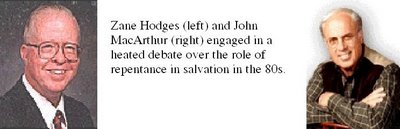
James Montgomery Boice, James Graham, George Peters, Charles H. H. Scobie, A. W. Tozer, Bruce Demarest, William Barclay, F. C. Grant, Daniel Fuller, Mark R. Talbot, Walter Chantry, J. I. Packer, Robert N. Wilkin, and Zane Hodges, (who says repentance is turning, but that it has nothing to do with salvation, just a harmonious relationship with God).
Those who side with the second definition above include:
Billy Graham, George Ladd, John R. W. Stott, and A. W. Pink (at times Pink seems to say it is an actual turning, at other times a determination to turn).
Those who side with the third definition above include:
Lewis Sperry Chafer, G. Michael Cocoris, H. A. Ironside, and Charles C. Ryrie.
Some would accuse those viewing repentance this way as denying justification by grace through faith (alone). This understanding does not make repentance a work; rather Scripture clearly calls it a gift (so Richardson, Stagg). This is brought out specifically in Rom 2:4 and 2 Tim 2:25: repentance is not achieved, but received. It is not a work; it is not a way to merit or be rewarded salvation. Therefore, it is a God enabling human response.
Can the OT help to understand the NT meaning of metanoia? The data is agreed upon but conclusions differ. If anything, the idea of turning from sins may not have been dominant and changing one’s mind may have been. But conclusions are tenuous. This is the reason that the emphasis has remained on the evaluation of the data from the NT.
Two aspects of repentance need to be distinguished. The emphasis in Scripture is upon the initial act of an unbeliever turning away from his sins and coming to faith in Christ. However, repentance is also a part of progressive sanctification, whereby Christians continually confess and align their lives with God’s will (see Luke 22:31–32; Eph 4:22–23; Rev 2:5, 16; 3:3, 19). It exists throughout one’s Christian life.
Therefore, this study sides with definition (2) described above, while finding much sympathy for the first definition.
Summary of Findings
Verse______Concept
Matt 3:7–9__Genuine repentance includes good fruit
Mk 1:14–15__Repentance and faith are inseparable, linked; repentance precedes faith
Matt 12:41___Repentance linked to turning; also related to believing
Acts 3:19____Repenting and turning are related
Acts 10:43___Repentance, believing, and turning are all related to each other
___________and to forgiveness of sins
Acts 11:19___Believing and turning are related
Acts 20:20___Repentance is directed toward God; it precedes believing
Acts 26:20___Paul characterized his preaching ministry as a call to repent
Who believes what?
Those who side with the first definition above include:
James Montgomery Boice, James Graham, George Peters, Charles H. H. Scobie, A. W. Tozer, Bruce Demarest, William Barclay, F. C. Grant, Daniel Fuller, Mark R. Talbot, Walter Chantry, J. I. Packer, Robert N. Wilkin, and Zane Hodges, (who says repentance is turning, but that it has nothing to do with salvation, just a harmonious relationship with God).
Those who side with the second definition above include:
Billy Graham, George Ladd, John R. W. Stott, and A. W. Pink (at times Pink seems to say it is an actual turning, at other times a determination to turn).
Those who side with the third definition above include:
Lewis Sperry Chafer, G. Michael Cocoris, H. A. Ironside, and Charles C. Ryrie.
Wednesday, April 19, 2006
News story
Another news story that was interesting ...
www.washingtonpost.com/wp-dyn/content/article/2006/04/14/AR2006041401737.html?sub=new
dave
www.washingtonpost.com/wp-dyn/content/article/2006/04/14/AR2006041401737.html?sub=new
dave
The Meaning of Repentance: Part 5
Regret vs. Repentance
While metanoeo and metanoia are frequent in the New Testament, metamelomai is not; it only occurs six times (Matt 21:29, 32; 27:3; 2 Cor 7:8 (twice); Heb 7:21). Wilkin is correct when he says that “there are no uses of metamelomai in the NT where ‘repentance’ is a good translation. It always refers to regret, remorse, or to a change of mind. It never refers to turning from one’s sins” (Wilkin, “New Testament Repentance,” 19). In fact, only one scholar could be located who referred to these terms as synonymous, but all the rest saw some level of distinction between them. However, the discussion was not altogether clear in the lexicons. For example, Thayer says that metamelomai refers to an emotional change, regret even remorse and metanoeo to a change of choice, entire life. He then proceeds to reject this distinction. He concludes by saying that metanoeo “is the fuller and nobler term, expressive of moral action and issues” (Thayer, Lexicon of the New Testament, 405). Similarly, Abbott-Smith is the lone example of believing in the synonymy of these words. He says that the terms are “synonymous,” and cites Thayer for support (who actually distinguished between the two words)(Abbott-Smith, Lexicon of the New Testament, 287).
Wilkin begins most of his discussions on the meaning of repentance from the meaning metanoia had in Classical Greek, as if that meaning would naturally carry over and should be the assumed meaning. In fact, at one point he refers, etymologically, to “after thought” or “second thoughts.” This can also be seen in Abbott-Smith when he defines metanoia as “after-thought, change of mind, repentance.” Anderson correctly refers to this as the root fallacy and counters this by saying that in the contexts in which metanoeo occur, it must mean more than both “after thought” and “change your mind” (Anderson, “Repentance,” 17). This kind of dependence upon etymology has long been abandoned by scholarship, but it continues to rear its ugly head from time to time.
While metanoeo and metanoia are frequent in the New Testament, metamelomai is not; it only occurs six times (Matt 21:29, 32; 27:3; 2 Cor 7:8 (twice); Heb 7:21). Wilkin is correct when he says that “there are no uses of metamelomai in the NT where ‘repentance’ is a good translation. It always refers to regret, remorse, or to a change of mind. It never refers to turning from one’s sins” (Wilkin, “New Testament Repentance,” 19). In fact, only one scholar could be located who referred to these terms as synonymous, but all the rest saw some level of distinction between them. However, the discussion was not altogether clear in the lexicons. For example, Thayer says that metamelomai refers to an emotional change, regret even remorse and metanoeo to a change of choice, entire life. He then proceeds to reject this distinction. He concludes by saying that metanoeo “is the fuller and nobler term, expressive of moral action and issues” (Thayer, Lexicon of the New Testament, 405). Similarly, Abbott-Smith is the lone example of believing in the synonymy of these words. He says that the terms are “synonymous,” and cites Thayer for support (who actually distinguished between the two words)(Abbott-Smith, Lexicon of the New Testament, 287).
Wilkin begins most of his discussions on the meaning of repentance from the meaning metanoia had in Classical Greek, as if that meaning would naturally carry over and should be the assumed meaning. In fact, at one point he refers, etymologically, to “after thought” or “second thoughts.” This can also be seen in Abbott-Smith when he defines metanoia as “after-thought, change of mind, repentance.” Anderson correctly refers to this as the root fallacy and counters this by saying that in the contexts in which metanoeo occur, it must mean more than both “after thought” and “change your mind” (Anderson, “Repentance,” 17). This kind of dependence upon etymology has long been abandoned by scholarship, but it continues to rear its ugly head from time to time.
Sunday, April 16, 2006
The Meaning of Repentance: Part 4
Repentance in the Acts of the Apostles
The relationship between repentance and believing continues to be developed in Acts. For example, while 3:19 says “repent and return (epistrefo), so that your sins may be wiped away,” 11:21 says, “a large number who believed turned (epistrefo) to the Lord.” From this, it can be seen that repenting and turning are related (3:19) and believing and turning are related (11:21). Those verses (especially 3:19) combined with 10:43 (“everyone who believes in Him receives forgiveness of sins”) shows that repentance, believing, and turning are all related to each other and to forgiveness of sins. Therefore, repentance is understood as “turning” in a salvific context.
The order and description in 20:20 is revealing. Paul says that he testified to both Jews and Greeks “of repentance toward God and faith in our Lord Jesus Christ.” Repentance is directed toward God and (if any order were pressed) precedes believing; faith is not some ephemeral feeling in some undeterminate “thing,” but directed toward Christ. Finally, Paul describes his preaching ministry as calling people everywhere to “repent and turn to God, performing deeds appropriate to repentance” (26:20). Similarly, 2 Pet 3:9 says that the opposite of people perishing is that they come to repentance. This is in a salvific context and should be considered the first act of believing by turning away from sins and to God. Here the term repent should be viewed as the initial act of coming to faith; it contains the idea of turning and will produce good deeds which demonstrate that the repentance was genuine, not simply sorrow or grief. Luter (“Repentance,” 673) mentions that Acts 26:20 with Luke 3:8 (“bear fruits in keeping with repentance”) essentially proves that a changed life is the “expected” result of repentance. More on the distinction between metanoeo and metamelomai will be said later.
The relationship between repentance and believing continues to be developed in Acts. For example, while 3:19 says “repent and return (epistrefo), so that your sins may be wiped away,” 11:21 says, “a large number who believed turned (epistrefo) to the Lord.” From this, it can be seen that repenting and turning are related (3:19) and believing and turning are related (11:21). Those verses (especially 3:19) combined with 10:43 (“everyone who believes in Him receives forgiveness of sins”) shows that repentance, believing, and turning are all related to each other and to forgiveness of sins. Therefore, repentance is understood as “turning” in a salvific context.
The order and description in 20:20 is revealing. Paul says that he testified to both Jews and Greeks “of repentance toward God and faith in our Lord Jesus Christ.” Repentance is directed toward God and (if any order were pressed) precedes believing; faith is not some ephemeral feeling in some undeterminate “thing,” but directed toward Christ. Finally, Paul describes his preaching ministry as calling people everywhere to “repent and turn to God, performing deeds appropriate to repentance” (26:20). Similarly, 2 Pet 3:9 says that the opposite of people perishing is that they come to repentance. This is in a salvific context and should be considered the first act of believing by turning away from sins and to God. Here the term repent should be viewed as the initial act of coming to faith; it contains the idea of turning and will produce good deeds which demonstrate that the repentance was genuine, not simply sorrow or grief. Luter (“Repentance,” 673) mentions that Acts 26:20 with Luke 3:8 (“bear fruits in keeping with repentance”) essentially proves that a changed life is the “expected” result of repentance. More on the distinction between metanoeo and metamelomai will be said later.
Tuesday, April 11, 2006
The Meaning of Repentance: Part 3
 Matthew 12:41 is another important passage (but often overlooked) for understanding the New Testament concept of repentance. Jesus is discussing Jonah and the Ninevites. His description of the Ninevites includes that they “repented at the preaching of Jonah.” Jesus uses metanoeo to describe their actions; what does the book of Jonah say? “Then the people of Nineveh believed in God” (Jon 3:5). (The LXX used empisteuo.) This belief of the Ninevites was then demonstrated by a call for a fast and putting on sackcloth (3:6) and ashes (3:7), followed by a declaration by the king for people to turn from their wicked ways. (The word used for "turn" in the LXX was not metanoeo but apostrefo.) Therefore, what Jesus calls “repenting,” the book of Jonah describes as believing and turning. This provides more evidence that Jesus’ use of metanoeo includes more than a change of mind, but includes a turning and relates to believing.
 Furthermore, this linking and interdependence of believing and repenting can also be seen in Luke 5:32: “I have not come to call the righteous but sinners to repentance.” The idea of turning can also be seen in Luke 17:4: “And if he sins against you seven times a day and seven times returns to you saying, ‘I repent,’ (then) forgive him.”
Sunday, April 09, 2006
News Story
Fascinating news story from Canada on the Salvation Army. Check it out ... let me know what you think!
dave
dave
Saturday, April 08, 2006
The Meaning of Repentance: Part 2
In the last post, the relationship between repentance and fruit was discussed. This post focus' on repentance and belief: “The time has been fulfilled and the kingdom of God is at hand; repent and believe in the gospel" (Mark 1:15). The decisive moment (kairos) had arrived and Jesus was now proclaiming the gospel. This twofold description, repent and believe, is the basis for discipleship in the Synoptic Gospels.
Jesus' call to believe is more than mere intellectual assent (especially in the Fourth Gospel), but is a call to accept the good news AND respond in commitment. This narrative (Mark 1:15) should be understood as paradigmatic for Mark's entire Gospel: every time Jesus is described as teaching or preaching, the desired response is faith and repentance; every time the mystery of the kingdom is discussed, it is to be viewed through repentance and faith (though both are not always mentioned).
For example, when the twelve were sent out (6:7–13), their message was for all to repent (6:12); faith is not mentioned, but implicitly included. So, what is the relationship between faith and repentance? They are inseparable! Pink has said it well: “Repentance is the heart’s acknowledgement of the justice of God’s sentence of condemnation; faith is the heart’s acceptance of the grace and mercy which are extended to us through Christ.” Spurgeon likened them to two spokes on a wheel; debates over which are first are misdirected. Therefore, repentance must lead to faith; faith cannot exist without repentance.

Jesus' call to believe is more than mere intellectual assent (especially in the Fourth Gospel), but is a call to accept the good news AND respond in commitment. This narrative (Mark 1:15) should be understood as paradigmatic for Mark's entire Gospel: every time Jesus is described as teaching or preaching, the desired response is faith and repentance; every time the mystery of the kingdom is discussed, it is to be viewed through repentance and faith (though both are not always mentioned).
For example, when the twelve were sent out (6:7–13), their message was for all to repent (6:12); faith is not mentioned, but implicitly included. So, what is the relationship between faith and repentance? They are inseparable! Pink has said it well: “Repentance is the heart’s acknowledgement of the justice of God’s sentence of condemnation; faith is the heart’s acceptance of the grace and mercy which are extended to us through Christ.” Spurgeon likened them to two spokes on a wheel; debates over which are first are misdirected. Therefore, repentance must lead to faith; faith cannot exist without repentance.
Tuesday, April 04, 2006
The Meaning of Repentance: Part 1
Over the next few posts, a few passages that contain the Greek words for repentance will be examined to aid in coming to an idea of what the underlying Greek words referred to ...
The beginning cry of John the Baptist's ministry, as found in Matthew 3, was: “Repent, for the kingdom of Heaven is near.” Similarly, in Mark 1:15, Jesus’ first words in the Gospel are: “The time has been fulfilled and the kingdom of God is at hand; repent and believe in the gospel.” Jesus’ first words include the idea of repenting and believing, and his first command is to repent. The call to repent is prominent in both Jesus' and John the Baptist's ministry.
One significant passage for determining the meaning of repentance in the New Testament is Matthew 3:7–9. The Pharisees and Sadducees came to where John was baptizing and upon seeing them, John scolds them saying: “You brood of vipers, who warned you to flee from the wrath about to come? Therefore, bear fruit worthy of repentance.” This final phrase, “bear fruit worthy of repentance,” is significant enough to take a closer look at.
First of all, John is not actually declaring that they in fact are fleeing from the wrath to come; it is sarcasm. This can be seen in that he just referred to them as the “offspring” or brood of vipers, a negative reference to their character. By first pointing out their poor character and then calling for fruit worthy of repentance before they would be allowed to be baptized, John is essentially asking for “concrete evidence of repentance” (Hagner, 50). What does concrete evidence of repentance look like? When someone has repented, it will be demonstrated in their life-style and behavior; it will flow from a heart that has been changed.
Is there a specific referent to “fruit” or is it a general term? Newman and Stine correctly note that fruit is a general term, referring to what grows out of a heart that has been changed. Kümmel said, “Only he who produces such fruit shows thereby that he is converted.” In order to escape the coming wrath the repentance needs to be genuine; it will be reflected by a persons entire lifestyle being “in harmony with our oral repentance” (Carson). Blomberg said, “(W)ithout the evidence of a changed life and perseverance in belief, all such grounds of trust prove futile.”
In 3:9, John the Baptist warns them not to rely upon their ancestry; they must produce good works (fruit) to demonstrate that they have repented. Therefore, a connection between repenting and that repentance having some evidence, good fruit, is present. While this passage definitely connects the concepts of "repentance" and the results, "good fruit," it also separates them. If the term "repentance" itself includes the concept of good fruit, then the phrase becomes redundant. Therefore, there is a strong connection between repentance and fruit, but there is also a separation.
The beginning cry of John the Baptist's ministry, as found in Matthew 3, was: “Repent, for the kingdom of Heaven is near.” Similarly, in Mark 1:15, Jesus’ first words in the Gospel are: “The time has been fulfilled and the kingdom of God is at hand; repent and believe in the gospel.” Jesus’ first words include the idea of repenting and believing, and his first command is to repent. The call to repent is prominent in both Jesus' and John the Baptist's ministry.
One significant passage for determining the meaning of repentance in the New Testament is Matthew 3:7–9. The Pharisees and Sadducees came to where John was baptizing and upon seeing them, John scolds them saying: “You brood of vipers, who warned you to flee from the wrath about to come? Therefore, bear fruit worthy of repentance.” This final phrase, “bear fruit worthy of repentance,” is significant enough to take a closer look at.
First of all, John is not actually declaring that they in fact are fleeing from the wrath to come; it is sarcasm. This can be seen in that he just referred to them as the “offspring” or brood of vipers, a negative reference to their character. By first pointing out their poor character and then calling for fruit worthy of repentance before they would be allowed to be baptized, John is essentially asking for “concrete evidence of repentance” (Hagner, 50). What does concrete evidence of repentance look like? When someone has repented, it will be demonstrated in their life-style and behavior; it will flow from a heart that has been changed.
Is there a specific referent to “fruit” or is it a general term? Newman and Stine correctly note that fruit is a general term, referring to what grows out of a heart that has been changed. Kümmel said, “Only he who produces such fruit shows thereby that he is converted.” In order to escape the coming wrath the repentance needs to be genuine; it will be reflected by a persons entire lifestyle being “in harmony with our oral repentance” (Carson). Blomberg said, “(W)ithout the evidence of a changed life and perseverance in belief, all such grounds of trust prove futile.”
In 3:9, John the Baptist warns them not to rely upon their ancestry; they must produce good works (fruit) to demonstrate that they have repented. Therefore, a connection between repenting and that repentance having some evidence, good fruit, is present. While this passage definitely connects the concepts of "repentance" and the results, "good fruit," it also separates them. If the term "repentance" itself includes the concept of good fruit, then the phrase becomes redundant. Therefore, there is a strong connection between repentance and fruit, but there is also a separation.
Sunday, April 02, 2006
Repentance and the Fourth Gospel
What is the place of "repentance" in the gospel presentation? Some would have us do away with any reference to sin or changing or turning altogether. Some would tell a sinner to stop sinning first, then he can be saved.
This next series of posts will focus on one small aspect of this debate. Robert Wilkin actually invites those who are studying the doctrine of repentance to read the Fourth Gospel to “discover what, if anything, John tells us about the role of repentance in salvation.” That is the challenge these next few posts will take.
First, a few posts will explore the meaning of metanoeo and metanoia. Then various texts from the FG will be presented and analyzed on whether or not they contain the concept of repentance. While it is true that the Greek words metanoeo and metanoia do not occur, that is irrelevant to whether the concept occurs. Many have missed this.
The goal is not to "solve" the old Lordship debate; however, the argument from the FG and its (supposed) lack of reference to repentance is the focus.
So, what does repentance mean? The three most common meanings given are: (1) a turning away from one’s sins (not just a willingness or resolve to do so); (2) the intention, resolve, or willingness to turn from sins; (3) to change one’s mind (about something). Which of these is correct? Or, is more than one correct?
This next series of posts will focus on one small aspect of this debate. Robert Wilkin actually invites those who are studying the doctrine of repentance to read the Fourth Gospel to “discover what, if anything, John tells us about the role of repentance in salvation.” That is the challenge these next few posts will take.
First, a few posts will explore the meaning of metanoeo and metanoia. Then various texts from the FG will be presented and analyzed on whether or not they contain the concept of repentance. While it is true that the Greek words metanoeo and metanoia do not occur, that is irrelevant to whether the concept occurs. Many have missed this.
The goal is not to "solve" the old Lordship debate; however, the argument from the FG and its (supposed) lack of reference to repentance is the focus.
So, what does repentance mean? The three most common meanings given are: (1) a turning away from one’s sins (not just a willingness or resolve to do so); (2) the intention, resolve, or willingness to turn from sins; (3) to change one’s mind (about something). Which of these is correct? Or, is more than one correct?

Friday, March 24, 2006
Women and the Bible
For a great discussion on the womens role in church life between Andreas Kostenberger and Ben Witherington, see http://biblicalfoundations.org/blog.html . Kostenberger has a post by himself, a response by Witherington, and a rejoinder by him.
dave
dave
Thursday, March 23, 2006
SoCal
Sorry for not updating my blog recently. I'm in vacation in beautiful Southern California visiting family. I'll be back at the end of March.
Also, an update on my job search: I'll be accepting a job at a great university and will be teaching there this Fall!! God is good!
Dave
Also, an update on my job search: I'll be accepting a job at a great university and will be teaching there this Fall!! God is good!
Dave
Monday, March 20, 2006
Principles for Giving in the NT-The Results of Giving
Finally, at least two specific results of the above giving are described in the NT. First, 2 Cor 9:6, 9-10 says that as we give this way, our righteousness will grow. Some have understood this verse differently, but I believe that the quote from the OT text demonstrates this sufficiently.
Secondly, our giving will edify. Generous giving will cause other believers to rejoice and glorify God (see 2 Cor 9:13).
These are the two result of giving: an increased righteousness and edification for the saints. This post concludes this series on giving … now on to a different topic …
The Result of Giving
Righteousness
Definition: Give so your righteousness will grow
Scripture: 2 Corinthians 9:6, 9–10
Edification
Definition: Generous giving will cause other believers to rejoice and glorify God
Scripture: 2 Corinthians 9:13
Secondly, our giving will edify. Generous giving will cause other believers to rejoice and glorify God (see 2 Cor 9:13).
These are the two result of giving: an increased righteousness and edification for the saints. This post concludes this series on giving … now on to a different topic …
The Result of Giving
Righteousness
Definition: Give so your righteousness will grow
Scripture: 2 Corinthians 9:6, 9–10
Edification
Definition: Generous giving will cause other believers to rejoice and glorify God
Scripture: 2 Corinthians 9:13
Friday, March 17, 2006
The Attitude of Giving (and Possessions)
There are at least four essential principles for our attitude of giving (and of possessions). These principles should be guiding our self-analysis when we give.
First, Christian giving is to be done voluntarily; there should not be any coercion or pressure. It is not the job of the preacher to “squeeze every nickel” out of Christians. 2 Corinthians 8:3b says, “they gave of their own accord,” and 9:7a says, “Each one must do just as he has purposed in his heart, not grudgingly or under compulsion.” Thus, rather than having to be compelled to give, we should give voluntarily.
However, beyond voluntary giving, we should also be intentional in our giving. We should seek opportunities and give deliberately in order to meet a genuine need, not only out of guilt merely to soothe a pressing request. 2 Cor 8:4 says, “begging us with much urging for the favor of participation in the support of the saints,” and 9:2 says, “for I know your readiness, of which I boast about you to the Macedonians, namely, that Achaia has been prepared since last year, and your zeal has stirred up most of them.” Thus, seeking out places in which to invest for eternity should be part of Christian giving.
The most often preached upon attitude is … give cheerfully. 2 Corinthians 9:7b says, “for God loves a cheerful giver.” Don’t give begrudgingly. Note that rather than understanding “cheerfully” as a reference to “hilarious giving,” (which is a word study fallacy), cheerful giving should be understood in contrast to 9:7a: “not grudgingly or under compulsion.” That phrase is the opposite of what Paul wants in our attitude in giving.
Finally, we should have a willingness to give. All of a Christians’ possessions should be placed at the Lord’s disposal. This refers to much more than money. While command to “sell all and give it to the poor” (Matt 19:16–21) is not a binding command on all Christians today, a principle underlying that text is: don’t be so attached to your possessions that you wouldn’t be willing to give them all up for the Lord at a moments notice.
These are four principles of what our attitude toward giving should look like. Only one more category of giving left and we will have discussed many of the NT principles for giving.
The Attitude of Giving (and Possessions)
Voluntary
Definition: Giving ought to be done out of one’s free volition: no coercion, no pressure
Scripture: 2 Corinthians 8:3; 9:7
Intentional
Definition: Seek opportunities and give deliberately in order to meet a genuine need, not out of guilt merely to soothe a pressing request
Scripture: 2 Corinthians 8:4 & 9:2
Cheerfully
Definition: God loves a cheerful giver
Scripture: 2 Corinthians 9:7
Willingness
Definition: All of a Christian’s possessions should be at the Lord’s disposal
Scripture: Matthew 19:16–21
First, Christian giving is to be done voluntarily; there should not be any coercion or pressure. It is not the job of the preacher to “squeeze every nickel” out of Christians. 2 Corinthians 8:3b says, “they gave of their own accord,” and 9:7a says, “Each one must do just as he has purposed in his heart, not grudgingly or under compulsion.” Thus, rather than having to be compelled to give, we should give voluntarily.
However, beyond voluntary giving, we should also be intentional in our giving. We should seek opportunities and give deliberately in order to meet a genuine need, not only out of guilt merely to soothe a pressing request. 2 Cor 8:4 says, “begging us with much urging for the favor of participation in the support of the saints,” and 9:2 says, “for I know your readiness, of which I boast about you to the Macedonians, namely, that Achaia has been prepared since last year, and your zeal has stirred up most of them.” Thus, seeking out places in which to invest for eternity should be part of Christian giving.
The most often preached upon attitude is … give cheerfully. 2 Corinthians 9:7b says, “for God loves a cheerful giver.” Don’t give begrudgingly. Note that rather than understanding “cheerfully” as a reference to “hilarious giving,” (which is a word study fallacy), cheerful giving should be understood in contrast to 9:7a: “not grudgingly or under compulsion.” That phrase is the opposite of what Paul wants in our attitude in giving.
Finally, we should have a willingness to give. All of a Christians’ possessions should be placed at the Lord’s disposal. This refers to much more than money. While command to “sell all and give it to the poor” (Matt 19:16–21) is not a binding command on all Christians today, a principle underlying that text is: don’t be so attached to your possessions that you wouldn’t be willing to give them all up for the Lord at a moments notice.
These are four principles of what our attitude toward giving should look like. Only one more category of giving left and we will have discussed many of the NT principles for giving.
The Attitude of Giving (and Possessions)
Voluntary
Definition: Giving ought to be done out of one’s free volition: no coercion, no pressure
Scripture: 2 Corinthians 8:3; 9:7
Intentional
Definition: Seek opportunities and give deliberately in order to meet a genuine need, not out of guilt merely to soothe a pressing request
Scripture: 2 Corinthians 8:4 & 9:2
Cheerfully
Definition: God loves a cheerful giver
Scripture: 2 Corinthians 9:7
Willingness
Definition: All of a Christian’s possessions should be at the Lord’s disposal
Scripture: Matthew 19:16–21
My daughter vs. Church tradition
Who do you think is right?
My daughter (5 years old) said that Jesus probably gave it to the poor.
Church tradition says that the gold was used by Joseph to pay for expenses when they fled to Egypt; that Jesus' parents kept the frankincense and gave it to the officials in the synagogue when Jesus came home to Nazareth and preached his first public sermon; and Mary kept the myrhh and gave it to be used for embalming in the tomb.
So, who is right?
My daughter (5 years old) said that Jesus probably gave it to the poor.
Church tradition says that the gold was used by Joseph to pay for expenses when they fled to Egypt; that Jesus' parents kept the frankincense and gave it to the officials in the synagogue when Jesus came home to Nazareth and preached his first public sermon; and Mary kept the myrhh and gave it to be used for embalming in the tomb.
So, who is right?
Thursday, March 16, 2006
Principles for Giving in the NT-The Motivations for Giving
The NT provides at least four motivations for giving. Two that curiously did not appear were: (1) the feeling of guilt; (2) receiving a better tax rebate. However, these four motivations are helpful in checking ourselves to see if we are giving out of the right heart.
But before the “positive” motivations are given, first an “anti-principle” (by “anti-principle,” I mean a rebuke for an incorrect motivation … note, when a principle and an anti-principle collides, gamma-radiation may be produced … you have been warned [this warning was given by Matt Lytle]). Negatively, we are warned in Matthew 6 about one improper motivation: to be seen by others. This passage is not a prohibition against keeping track of contributions. Rather, it asks: are you giving so that others will see what you gave? It isn’t necessitating total secrecy; it is encouraging correct motivations in giving (see below). For one application, public giving of money (like publishing the names of generous donors) may be an example of what Jesus is teaching against.
The first principle is that of love. Our giving should be an expression of our love for God. 2 Corinthians 8:8–9: “I am not speaking this as a command, but as proving through the earnestness of others the sincerity of your love also. For you know the grace of our Lord Jesus Christ, that though He was rich, yet for your sake He became poor, so that you through His poverty might become rich.”
Giving should also be an expression of our thankfulness to God. In 2 Corinthians 9:12, Paul says, “For the ministry of this service is not only fully supplying the needs of the saints, but is also overflowing through many thanksgivings to God.”
A third motivation is the recognition that God praises sacrificial giving. One description of this occurs in Mark 12:42–44. Also, in 2 Corinthians 8:2–3, Paul says, “that in a great ordeal of affliction their abundance of joy and their deep poverty overflowed in the wealth of their liberality. For I testify that according to their ability, and beyond their ability, they gave of their own accord.” While sacrificial giving is not necessarily a requirement, recognizing that this type of giving is pleasing to our Heavenly Father should be the only motivation needed to enact it in our own lives.
Finally, a fourth motivation (some may dispute this classification) is what I’ve called “spiritual growth.” That is, giving causes one to grow in good works. In 2 Corinthians 9:6, 8, Paul say, “Now this I say, he who sows sparingly will also reap sparingly, and he who sows bountifully will also reap bountifully.… And God is able to make all grace abound to you, so that always having all sufficiency in everything, you may have an abundance for every good deed.” These verses appear to say that we should be motivated to give because it will effect spiritual growth in our lives.
The Motivations of Giving
Love
Definition: Giving is an expression of our love for God
Scripture: 2 Corinthians 8:8–9
Thankfulness
Definition: Giving expresses thankfulness to God
Scripture: 2 Corinthians 9:12
God’s Praise
Definition: Recognize that God praises sacrificial giving
Scripture: Mark 12:42–44; 2 Corinthians 8:2–3
Spiritual Growth
Definition: Giving causes one to grow in good works
Scripture: 2 Corinthians 9:6, 8
But before the “positive” motivations are given, first an “anti-principle” (by “anti-principle,” I mean a rebuke for an incorrect motivation … note, when a principle and an anti-principle collides, gamma-radiation may be produced … you have been warned [this warning was given by Matt Lytle]). Negatively, we are warned in Matthew 6 about one improper motivation: to be seen by others. This passage is not a prohibition against keeping track of contributions. Rather, it asks: are you giving so that others will see what you gave? It isn’t necessitating total secrecy; it is encouraging correct motivations in giving (see below). For one application, public giving of money (like publishing the names of generous donors) may be an example of what Jesus is teaching against.
The first principle is that of love. Our giving should be an expression of our love for God. 2 Corinthians 8:8–9: “I am not speaking this as a command, but as proving through the earnestness of others the sincerity of your love also. For you know the grace of our Lord Jesus Christ, that though He was rich, yet for your sake He became poor, so that you through His poverty might become rich.”
Giving should also be an expression of our thankfulness to God. In 2 Corinthians 9:12, Paul says, “For the ministry of this service is not only fully supplying the needs of the saints, but is also overflowing through many thanksgivings to God.”
A third motivation is the recognition that God praises sacrificial giving. One description of this occurs in Mark 12:42–44. Also, in 2 Corinthians 8:2–3, Paul says, “that in a great ordeal of affliction their abundance of joy and their deep poverty overflowed in the wealth of their liberality. For I testify that according to their ability, and beyond their ability, they gave of their own accord.” While sacrificial giving is not necessarily a requirement, recognizing that this type of giving is pleasing to our Heavenly Father should be the only motivation needed to enact it in our own lives.
Finally, a fourth motivation (some may dispute this classification) is what I’ve called “spiritual growth.” That is, giving causes one to grow in good works. In 2 Corinthians 9:6, 8, Paul say, “Now this I say, he who sows sparingly will also reap sparingly, and he who sows bountifully will also reap bountifully.… And God is able to make all grace abound to you, so that always having all sufficiency in everything, you may have an abundance for every good deed.” These verses appear to say that we should be motivated to give because it will effect spiritual growth in our lives.
The Motivations of Giving
Love
Definition: Giving is an expression of our love for God
Scripture: 2 Corinthians 8:8–9
Thankfulness
Definition: Giving expresses thankfulness to God
Scripture: 2 Corinthians 9:12
God’s Praise
Definition: Recognize that God praises sacrificial giving
Scripture: Mark 12:42–44; 2 Corinthians 8:2–3
Spiritual Growth
Definition: Giving causes one to grow in good works
Scripture: 2 Corinthians 9:6, 8
Wednesday, March 15, 2006
From the mouths of babes
My daughter asked me a question I have been thinking about: What did Jesus/Jesus' parent(s) do with the gifts from the wise men? Any thoughts? She said she figured it out ...

Principles for Giving in the NT-The Amount of Giving
When I’ve explicated the above principles, people always look at me and ask: “But how much? How much do we have to give?” Unfortunately, this is the wrong focus. Regardless, the New Testament does discuss principles we can use to decide how much to give. Some desire to begin their giving with a tithe and then use these principles on top of that; others just use these principles. However, if we apply these principles consistently and honestly, it’s hard for me to imagine many Christians in the U.S. giving less than ten percent. If someone were to tell me they couldn’t afford to give ten percent, but said they wanted to give more, I would probably ask them if they wanted to sit down and go over their budget. Materialism is one of the top reasons Christians don’t give as much as they could; another reason is the confusion between what we “want” and what we “need.” For example, as normal as “high speed internet” is, it is still a “want” and not a “need.” Hopefully these four principles will open our eyes and convict our hearts of our failure in giving … even to those giving more than ten percent.
Christian giving must be heart-based giving. Scripture in both Testaments commands that followers of God decide the amount to give based on our “heart.” Now, the “heart” in the NT does not refer to emotions, but more to resolve, sound judgment, or the seat of decision making. Sometimes it is even translated “mind.” In the OT, giving based on this principle can be seen in Exodus 25:1–2; 35:5, 21–22; 36:6. In these passages it becomes utterly clear that the giving of the Israelites, based on this principle, was an abundant offering. So much so that Moses told them to stop giving. Also, in 2 Corinthians 9:7a, Paul says, “Each one must do just as he has purposed in his heart.”
Christian giving is also to be based upon our income. The amount we give is expected to be related to our income. In 1 Corinthians 16:2a, Paul says, “On the first day of every week each one of you is to put aside and save, as he may prosper.” We give according to our prosperity; we are not asked to give above or beyond our prosperity. This is usually referred to as “proportional giving,” that is, the more a person makes, the higher percentage of his income he will give. See also Deuteronomy 16:16–17; 2 Corinthians 8:3, 12.
Another principle in deciding the amount of giving is based upon the needs present. We should consider the needs of those ministering to us and the needs of fellow saints. Regarding the former, 1 Corinthians 9:1–14 is clear that “those who proclaim the gospel [are] to get their living from the gospel” (vs. 14b). Our pastors should never be worrying about their bills. If an unexpected bill arises, we should give above and beyond to meet that need. Note that one of the requirements for becoming an elder is that he is not greedy. Therefore, by placing him in this position we have already decided that he is not after money and can be trusted in this area. 2 Corinthians 8:13–14, 9:12 discuss the Corinthians meeting the needs of other Christians. The latter verse says that gifts for this purpose are “also overflowing through many thanksgivings to God.” Note that when a congregation decides on a budget for the year, that becomes the "need" of the congregation. When we see that the offerings are less than the budgeted amount, we should strive to increase our giving.
Finally, we should give generously. However, we are not asked to give so much that we need an offering ourselves. In 2 Corinthians 8:2b–3, 13, Paul says, “But they are also filled with abundant joy, which has overflowed in rich generosity. For I can testify that they gave not only what they could afford, but far more. And they did it of their own free will. . . . Of course, I don't mean your giving should make life easy for others and hard for yourselves. I only mean that there should be some equality” (usually I cite from the NASB, but the NLT made this verse much clearer). While different people might define “generously” differently, if we take a close look at our priorities, motivations, and the needs of others, in our hearts/minds we know whether our gifts are generous or feeble. Furthermore, God, who provides us with all we have, also knows the intent of our hearts/minds as we give. See also Philippians 4:17–18.
These four principles for the amount of giving should lead nearly all American Christians to give beyond a measly ten percent. Our goal in giving should be to increase it as much as possible. Don’t settle for ten percent when God has provided you with the resources to give beyond that.
The Amount of Giving
Heart-Based Giving
Definition: Giving is based upon the amount determined in one’s heart
Scripture: Exodus 25:1; 35:5, 21–22; 36:6; 2 Corinthians 9:7
Income-Based Giving
Definition: The value of the gift given is expected to be related to the income of the offerer
Scripture: Deuteronomy 16:16–17; 1 Corinthians 16:2; 2 Corinthians 8:3, 12
Needs-Based Giving
Definition: Meet the needs of those ministering and of fellow saints
Scripture: 1 Corinthians 9:1–14; 2 Corinthians 8:13–14; 9:12
Generous Giving
Definition: Give generously, but not to the point of personal affliction
Scripture: 2 Corinthians 8:2–3, 13; Philippians 4:17–18
Christian giving must be heart-based giving. Scripture in both Testaments commands that followers of God decide the amount to give based on our “heart.” Now, the “heart” in the NT does not refer to emotions, but more to resolve, sound judgment, or the seat of decision making. Sometimes it is even translated “mind.” In the OT, giving based on this principle can be seen in Exodus 25:1–2; 35:5, 21–22; 36:6. In these passages it becomes utterly clear that the giving of the Israelites, based on this principle, was an abundant offering. So much so that Moses told them to stop giving. Also, in 2 Corinthians 9:7a, Paul says, “Each one must do just as he has purposed in his heart.”
Christian giving is also to be based upon our income. The amount we give is expected to be related to our income. In 1 Corinthians 16:2a, Paul says, “On the first day of every week each one of you is to put aside and save, as he may prosper.” We give according to our prosperity; we are not asked to give above or beyond our prosperity. This is usually referred to as “proportional giving,” that is, the more a person makes, the higher percentage of his income he will give. See also Deuteronomy 16:16–17; 2 Corinthians 8:3, 12.
Another principle in deciding the amount of giving is based upon the needs present. We should consider the needs of those ministering to us and the needs of fellow saints. Regarding the former, 1 Corinthians 9:1–14 is clear that “those who proclaim the gospel [are] to get their living from the gospel” (vs. 14b). Our pastors should never be worrying about their bills. If an unexpected bill arises, we should give above and beyond to meet that need. Note that one of the requirements for becoming an elder is that he is not greedy. Therefore, by placing him in this position we have already decided that he is not after money and can be trusted in this area. 2 Corinthians 8:13–14, 9:12 discuss the Corinthians meeting the needs of other Christians. The latter verse says that gifts for this purpose are “also overflowing through many thanksgivings to God.” Note that when a congregation decides on a budget for the year, that becomes the "need" of the congregation. When we see that the offerings are less than the budgeted amount, we should strive to increase our giving.
Finally, we should give generously. However, we are not asked to give so much that we need an offering ourselves. In 2 Corinthians 8:2b–3, 13, Paul says, “But they are also filled with abundant joy, which has overflowed in rich generosity. For I can testify that they gave not only what they could afford, but far more. And they did it of their own free will. . . . Of course, I don't mean your giving should make life easy for others and hard for yourselves. I only mean that there should be some equality” (usually I cite from the NASB, but the NLT made this verse much clearer). While different people might define “generously” differently, if we take a close look at our priorities, motivations, and the needs of others, in our hearts/minds we know whether our gifts are generous or feeble. Furthermore, God, who provides us with all we have, also knows the intent of our hearts/minds as we give. See also Philippians 4:17–18.
These four principles for the amount of giving should lead nearly all American Christians to give beyond a measly ten percent. Our goal in giving should be to increase it as much as possible. Don’t settle for ten percent when God has provided you with the resources to give beyond that.
The Amount of Giving
Heart-Based Giving
Definition: Giving is based upon the amount determined in one’s heart
Scripture: Exodus 25:1; 35:5, 21–22; 36:6; 2 Corinthians 9:7
Income-Based Giving
Definition: The value of the gift given is expected to be related to the income of the offerer
Scripture: Deuteronomy 16:16–17; 1 Corinthians 16:2; 2 Corinthians 8:3, 12
Needs-Based Giving
Definition: Meet the needs of those ministering and of fellow saints
Scripture: 1 Corinthians 9:1–14; 2 Corinthians 8:13–14; 9:12
Generous Giving
Definition: Give generously, but not to the point of personal affliction
Scripture: 2 Corinthians 8:2–3, 13; Philippians 4:17–18
Tuesday, March 14, 2006
Principles for Giving in the NT-The Details of Giving
While the three foundational elements are helpful for the process for giving, certain details are spelled out that should guide Christian giving as well.
First, giving should be universal. Every believer should be involved with giving. 1 Cor 16:2a says, “On the first day of every week each one of you.” So, it isn’t only the rich/wealthy who should be giving, but every Christian should be involved.
Second, Christian giving should be systematic, not sporadic or spontaneous. We need to be giving on a regular basis, that is, weekly, bi-monthly, or monthly. The more often, the better. Again, 1 Cor 16:2a says, “On the first day of every week.” Why does Paul say this? There could be many reasons, including the fact that the more consistently we give, the more we will give in the long run. Giving $100 every week is, for most people, much easier than giving $5200 per year. Writing that check for $5200 could inevitably be a painful experience for some, thus not a joyful/cheerful experience. Also, practically speaking, churches have bills to pay and salaries to pay. If all Christians began giving every couple of months, the church would have a hard time paying its bills on time.
Third, certain precautions should be made with the contributions. Those who handle the money should be trustworthy individuals. 2 Cor 8:18-21 says, “We have sent along with him the brother whose fame in the things of the gospel has spread through all the churches; and not only this, but he has also been appointed by the churches to travel with us in this gracious work, which is being administered by us for the glory of the Lord Himself, and to show our readiness, taking precaution so that no one will discredit us in our administration of this generous gift; for we have regard for what is honorable, not only in the sight of the Lord, but also in the sight of men.” This may be where the modern practice that pastors have nothing to do with the collection (and have no knowledge of who-gave-what) came from. Regardless, Paul took this precaution and it would be wise for us to do this, also.
There are three details to our giving that need to be considered alongside of the foundations for Christian giving.
The Details of Giving
Universal
Definition: Every believer should give
Scripture: 1 Corinthians 16:2 (cf. Rom 1:20–21)
Systematic
Definition: Give on a regular basis, that is, weekly, bi-monthly, or monthly
Scripture: 1 Corinthians 16:2
Proper Precautions
Definition: Precautions should be made with the handling of money
Scripture: 2 Corinthians 8:18–21
Monday, March 13, 2006
Principles for Giving in the New Testament-The Foundations for Giving
This blog will now turn to some of the positive teachings in the New Testament concerning giving. There are certain foundational principles for giving communicated in the New Testament. These three principles describe how are giving should be driven.
First, our giving should be driven by our relationship with God. 2 Cor 8:5b says, “but they first gave themselves to the Lord and to us by the will of God.” Giving money without having given oneself to the Lord is the wrong order. We should first examine and focus on our relationship with God.
Second, our giving should be a response to the grace God has shown us. 2 Cor 8-9 is filled with the word “grace.” As Craig Blomberg says, “grace is the entire theme of this entire two-chapter section.” When preparing oneself to give, reflect upon how God has shown grace to you. If you have a difficult time seeing how God has shown you grace, you probably should go back to step one: your relationship with Him.
Third, our giving should be driven (and motivated [see future post]) our love for God. 2 Cor 8:8 says, “I am not speaking this as a command, but as proving through the earnestness of others the sincerity of your love also.” Our giving will prove how sincere our love for God really is … it is a demonstration of our love. The gift Paul received from the Philippians (Phil 4:15-19) was a demonstration of their love for God, and for Paul.
These are the three foundational pillars for giving in the New Testament.
Foundations for Giving
Relationship-Driven Giving
Definition: Our giving is to be based upon our relationship with the Lord, the receiver of our gifts
Scripture: 2 Corinthians 8:4-5
Grace-Driven Giving
Definition: Our giving is to be a response to the grace God has shown to us
Scripture: 2 Corinthians 8–9
Love-Driven Giving
Definition: Our giving is to be a demonstration of our love
Scripture: 2 Corinthians 8:8 (cf. Phil 4:15–20)
First, our giving should be driven by our relationship with God. 2 Cor 8:5b says, “but they first gave themselves to the Lord and to us by the will of God.” Giving money without having given oneself to the Lord is the wrong order. We should first examine and focus on our relationship with God.
Second, our giving should be a response to the grace God has shown us. 2 Cor 8-9 is filled with the word “grace.” As Craig Blomberg says, “grace is the entire theme of this entire two-chapter section.” When preparing oneself to give, reflect upon how God has shown grace to you. If you have a difficult time seeing how God has shown you grace, you probably should go back to step one: your relationship with Him.
Third, our giving should be driven (and motivated [see future post]) our love for God. 2 Cor 8:8 says, “I am not speaking this as a command, but as proving through the earnestness of others the sincerity of your love also.” Our giving will prove how sincere our love for God really is … it is a demonstration of our love. The gift Paul received from the Philippians (Phil 4:15-19) was a demonstration of their love for God, and for Paul.
These are the three foundational pillars for giving in the New Testament.
Foundations for Giving
Relationship-Driven Giving
Definition: Our giving is to be based upon our relationship with the Lord, the receiver of our gifts
Scripture: 2 Corinthians 8:4-5
Grace-Driven Giving
Definition: Our giving is to be a response to the grace God has shown to us
Scripture: 2 Corinthians 8–9
Love-Driven Giving
Definition: Our giving is to be a demonstration of our love
Scripture: 2 Corinthians 8:8 (cf. Phil 4:15–20)
Friday, March 10, 2006
Six Advocates of Tithing between 366-400
Many more references to tithing are found in the Nicene and Post-Nicene period. Six Church Fathers between 366 and 400 advocated tithing with none arguing against it. Constantine (c.a. 325 A.D.) had a large impact on Christianity while he was emperor. It was under Constantine that the church and state were united. Constantine himself was a generous giver to churches. However, no mention has been found of him collecting or paying tithes. Basil of Caesarea (370 A.D.) exhorted Christians to pay tithes and Gregory of Nazianzus (c.a. 365) mentions first fruits, but no reference to tithes has been found in the writings of Gregory of Nyssa (c.a. 365). Hilary of Poitiers (366 A.D.), when commenting on Matthew 23:23, concluded that while Christians should place a greater emphasis upon justice and mercy, tithing was still required.
 Jerome (pictured left)(385 A.D.) saw the clergy as being in the line of tribe of Levi and the Jewish priesthood and therefore due tithes. In comments made on Malachi 3, Jerome said that Jesus commanded Christians to sell everything and give the proceeds to the poor. Since Christians are unwilling to do that, at least they should “imitate the rudimentary teaching of the Jews” in giving tithes for the poor and the clergy. Otherwise, Christians are “defrauding and cheating God.” Ambrose (374 A.D.), the Bishop of Milan, was unequivocal that Christians are required to tithe. If Christians neglected to give God his tenth, then God will take what they have. He clearly supported the concept of tithing. John Chrysostom (375 A.D.) said that the Christians of his day should return to tithing or face dangerous consequences. He understood the Old Testament to be inculcating multiple tithes, not one (“tithes again upon tithes”). Commenting on Matthew 5:20, Chrysostom calculates that the Jews gave about half of their income. He concluded that if when giving half “achieves no great thing, he who doth not bestow as much as the tenth, of what shall he be worthy.” While Chrysostom thought that Christians fulfilled the Old Testament law by tithing, he also believed Christians should not need law.
 Augustine (pictured left)(400 A.D.), Bishop of Hippo, is one the most often cited church fathers by both Catholics and Protestants. He said that while the paying of tithes occurred before him, presently Christians were not adequately paying their tithes. Augustine believed that Jesus’ command to sell one’s possessions and give the proceeds to the poor was binding upon Christians. He lived this out in his own life. However, since Christians were unwilling to give all, they should at least imitate the Jews and give a tenth. Therefore, Augustine supported tithing through concession.
In summary, the following Church Fathers all advocated tithing and none were found in this time period that argued against tithing: Hilary of Poitiers (366), Basil of Caesarea (370), Ambrose (374), John Chrysostom (375), Jerome (385), and Augustine (400).
References and Resources:
Joseph Bingham, The Works of Joseph Bingham, ed. R. Bingham, 10 vols. (Oxford: Oxford University Press, 1855), 2:179–82.
Powers, “Historical Study of the Tithe,” 39, 49.
Lyman Coleman, Ancient Christianity Exemplified in the Private, Domestic, Social, and Civil Life of the Primitive Christians, and in the Original Institutions, Offices, Ordinances, and Rites of the Church (Philadelphia: Lippincott, Grambo & Company, 1852), 229.
Hilary, Commentary on Matthew 23 (cited by Powers, “Historical Study of the Tithe,” 42; Lansdell, Sacred Tenth, 192–93).
Jerome, Letter to Nepotian (NPNF2 1:91). Jerome also commends Christians to tithe in his Commentary on Matthew 2.22 (cited by Murray, Beyond Tithing, 117).
Sharp, “Tithes,” 2:1964.
John Chrysostom, Homily IV: Homilies on Ephesians (NPNF1 13:69). For some incidental references to tithing see Chrysostom, Homilies on Genesis 35, 54 (cited by Murray, Beyond Tithing, 112, n. 28) and Chrysostom, Homilies on Hebrews 12 (NPNF1 14:423–26). Chrysostom, The Gospel of Matthew 64.4 (NPNF1 10:395–96).
Lansdell, Sacred Tenth, 187.
Augustine, On the Psalms: Pslam 147 13 (NPNF1 8:668). Augustine, Sermon 35 (NPNF1 6:367–68); Sermon 56 (NPNF1 6:435–36).
Justo Gonzales, Faith and Wealth (San Francisco: Harper, 1990), 219.
 Jerome (pictured left)(385 A.D.) saw the clergy as being in the line of tribe of Levi and the Jewish priesthood and therefore due tithes. In comments made on Malachi 3, Jerome said that Jesus commanded Christians to sell everything and give the proceeds to the poor. Since Christians are unwilling to do that, at least they should “imitate the rudimentary teaching of the Jews” in giving tithes for the poor and the clergy. Otherwise, Christians are “defrauding and cheating God.” Ambrose (374 A.D.), the Bishop of Milan, was unequivocal that Christians are required to tithe. If Christians neglected to give God his tenth, then God will take what they have. He clearly supported the concept of tithing. John Chrysostom (375 A.D.) said that the Christians of his day should return to tithing or face dangerous consequences. He understood the Old Testament to be inculcating multiple tithes, not one (“tithes again upon tithes”). Commenting on Matthew 5:20, Chrysostom calculates that the Jews gave about half of their income. He concluded that if when giving half “achieves no great thing, he who doth not bestow as much as the tenth, of what shall he be worthy.” While Chrysostom thought that Christians fulfilled the Old Testament law by tithing, he also believed Christians should not need law.
 Augustine (pictured left)(400 A.D.), Bishop of Hippo, is one the most often cited church fathers by both Catholics and Protestants. He said that while the paying of tithes occurred before him, presently Christians were not adequately paying their tithes. Augustine believed that Jesus’ command to sell one’s possessions and give the proceeds to the poor was binding upon Christians. He lived this out in his own life. However, since Christians were unwilling to give all, they should at least imitate the Jews and give a tenth. Therefore, Augustine supported tithing through concession.
In summary, the following Church Fathers all advocated tithing and none were found in this time period that argued against tithing: Hilary of Poitiers (366), Basil of Caesarea (370), Ambrose (374), John Chrysostom (375), Jerome (385), and Augustine (400).
References and Resources:
Joseph Bingham, The Works of Joseph Bingham, ed. R. Bingham, 10 vols. (Oxford: Oxford University Press, 1855), 2:179–82.
Powers, “Historical Study of the Tithe,” 39, 49.
Lyman Coleman, Ancient Christianity Exemplified in the Private, Domestic, Social, and Civil Life of the Primitive Christians, and in the Original Institutions, Offices, Ordinances, and Rites of the Church (Philadelphia: Lippincott, Grambo & Company, 1852), 229.
Hilary, Commentary on Matthew 23 (cited by Powers, “Historical Study of the Tithe,” 42; Lansdell, Sacred Tenth, 192–93).
Jerome, Letter to Nepotian (NPNF2 1:91). Jerome also commends Christians to tithe in his Commentary on Matthew 2.22 (cited by Murray, Beyond Tithing, 117).
Sharp, “Tithes,” 2:1964.
John Chrysostom, Homily IV: Homilies on Ephesians (NPNF1 13:69). For some incidental references to tithing see Chrysostom, Homilies on Genesis 35, 54 (cited by Murray, Beyond Tithing, 112, n. 28) and Chrysostom, Homilies on Hebrews 12 (NPNF1 14:423–26). Chrysostom, The Gospel of Matthew 64.4 (NPNF1 10:395–96).
Lansdell, Sacred Tenth, 187.
Augustine, On the Psalms: Pslam 147 13 (NPNF1 8:668). Augustine, Sermon 35 (NPNF1 6:367–68); Sermon 56 (NPNF1 6:435–36).
Justo Gonzales, Faith and Wealth (San Francisco: Harper, 1990), 219.
Wednesday, March 08, 2006
Tithing in the Ante-Nicene Period: The Fourth Century
In the fourth century, the Apostolic Constitutions gave separate instructions for bishops regarding two issues: (1) tenths and first fruits; and (2) free will offerings. This document also states that tithes were “the command of God.” Furthermore, the Constitutions likened bishops with priests and Levites, and the tabernacle with the Holy Catholic Church. It exhorted all Christians to give their first fruits and tithes. While the Constitutions contains the strongest statement about tithing in the Ante-Nicene period, this passage may be of a much later date than the rest of the document.
During this period, nothing was said (directly) about tithing by Ignatius of Antioch, Polycarp of Smyrna, Quadratus, Tatian, Hippolytus, Kallistos, and Novatian. In the second century, Irenaeus apparently believed that Jesus abrogated tithing. Clement of Rome’s comments are innocuous and could have been based upon 1 Corinthians 16. There is no good reason to infer tithing from his writings. The Didache never discusses obligatory giving or tithing; it does state the principle of 1 Corinthians 9:14 that ministers have a right to live from the gospel. Justin Martyr’s description of contributions never mentions tithing, though it would have fit well into the context if Christians practiced tithing. Justin’s description of contributions offer support against the idea that tithing was being practiced in the churches during his time. In the third century, Clement of Alexandria concluded that Christians need to tithe. However, his support of keeping the Sabbatical Year and Year of Jubilees renders his view on issues in the law-gospel relationship suspect. Tertullian’s description of giving is incompatible with the conclusion that Christians must tithe. Origen specifically said that he did not tithe and Cyprian’s comments can be understood to mean that tithing was not practice in his time. The Didascalia Apostlorum explicitly said that Christians were not bound to give tithes or first fruits.
Resources and References:
The Constitutions of the Holy Apostles 2.4.25 (ANF 7:408); 7.29 (ANF 7:471). See also statements at 2.4.27; 2.4.34; 8.30–31.
See ANF 7:388.
Powers, “Historical Study of the Tithe,” 32.
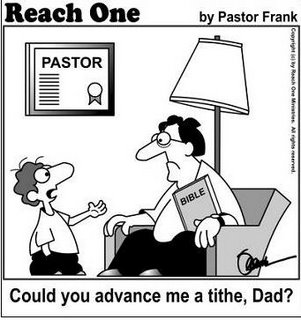
During this period, nothing was said (directly) about tithing by Ignatius of Antioch, Polycarp of Smyrna, Quadratus, Tatian, Hippolytus, Kallistos, and Novatian. In the second century, Irenaeus apparently believed that Jesus abrogated tithing. Clement of Rome’s comments are innocuous and could have been based upon 1 Corinthians 16. There is no good reason to infer tithing from his writings. The Didache never discusses obligatory giving or tithing; it does state the principle of 1 Corinthians 9:14 that ministers have a right to live from the gospel. Justin Martyr’s description of contributions never mentions tithing, though it would have fit well into the context if Christians practiced tithing. Justin’s description of contributions offer support against the idea that tithing was being practiced in the churches during his time. In the third century, Clement of Alexandria concluded that Christians need to tithe. However, his support of keeping the Sabbatical Year and Year of Jubilees renders his view on issues in the law-gospel relationship suspect. Tertullian’s description of giving is incompatible with the conclusion that Christians must tithe. Origen specifically said that he did not tithe and Cyprian’s comments can be understood to mean that tithing was not practice in his time. The Didascalia Apostlorum explicitly said that Christians were not bound to give tithes or first fruits.
Resources and References:
The Constitutions of the Holy Apostles 2.4.25 (ANF 7:408); 7.29 (ANF 7:471). See also statements at 2.4.27; 2.4.34; 8.30–31.
See ANF 7:388.
Powers, “Historical Study of the Tithe,” 32.
Tuesday, March 07, 2006
Tithing in the Ante-Nicene Period: The Third Century (part 2)
 Cyprian (pictured left)(died 258 A.D.), Bishop of Carthage, said that Christians in his time were not giving “even . . . the tenths from our patrimony; and while our Lord bids us sell, we rather buy and increase our store.” In another statement, he says that the clergy receive “as they do in the gifts and donations of their brethren the tenth portion, as it were, of the fruits of the earth.” The emphasis of this passage is on the clergy receiving adequate support for their ministry, as the Levites and priests did in the Old Testament. Rather than urging Christians to tithe, he used the phrase “as it were,” which, according to Murray, “suggests that the reference to tithing is by way of comparison rather than an indication that Cyprian was instructing his readers to comply literally with this Old Testament principle.” Futhermore, G. W. Clarke said that this phrase proves that tithing was not practiced during Cyprian’s day. Cyprian appeared to believe that the tithe was the minimum and that it was voluntary.
Finally, a document from Syria around 225 A.D., the Didascalia Apostolorum, contains some important thoughts on tithing and the law-gospel relationship. Regarding the former, the document said that the laws of the “Second Legislation,” which were all the laws given after the Ten Commandments, should be avoided; they were only given after Israel worshipped idols in the wilderness. Jesus fulfilled the law, that is, “set us loose from the bonds of the Second Legislation.” While it may appear at first that the document was supporting tithing to the bishop, it also said: “No more be bound with sacrifices and oblations, and with sin offerings, purifications, and vows . . . nor yet with tithes and firstfruits . . . . for it was laid upon them [i.e. the Israelites] to give all these things as of necessity, but you are not bound by these things. . . . Now thus shall your righteousness abound more than their tithes and firstfruits and part-offerings, when you shall do as it is written: Sell all thou hast, and give to the poor.” Thus, the old system of tithing has no place in Christianity since a new system has been instituted by the New Testament.
References and Resources:
Cyprian, Treatises of Cyprian: Treatise I: On the Unity of the Church 26 (ANF 5:429). For incidental references to tithing, see Treatises of Cyprian: Treatise IV: On the Lord’s Prayer 6, Treatises of Cyprian: Treatise V: An Address to Demetrianus 25; Epistle 65 1; Epistle 74 10.
Cyprian, “Letter 1,” 1.2 in The Letters of St. Cyprian of Carthage, trans & ann. G. W. Clarke, vol. 1, Ancient Christian Writers 43 (New York: Newman, 1984), 1:52.
Murray, Beyond Tithing, 105.
G. W. Clarke, The Letters of St Cyprian of Carthage, Ancient Christian Writers 43 (New York: Newman Press, 1984), 157. Here’s the quote: “The tamquam must imply that a strict system of tithing did not operate at the time in this area.”
Powers, “Historical Study of the Tithe,” 27.
R. Hugh Connolly, Didascalia Apostolorum: The Syriac Version Translated and Accompanied by the Verona Latin Fragments (Oxford: Clarendon Press, 1929), lxxxvii–xci, 13–14, 96, 98, 224–26.
Monday, March 06, 2006
Tithing in the Ante-Nicene Period: The Third Century (part 1)
 In the third century, five writings prove pertinent. Clement of Alexandria (pictured left)(150–215 A.D.), the forerunner to Origen in the Alexandrian school, considered tithing to be in the same category as the Sabbatical Year and the Year of Jubilee. Therefore, since God gave the Mosaic law for the good of humanity, tithing, as well as the Sabbatical Year and Year of Jubilee, should not be viewed as compulsory, but should be done for the spiritual well-being of the giver.
Tertullian (pictured right)(160–230 A.D.), in
 his Apology, stated that churches had a treasury chest and Christians made contributions every month: “on the monthly day, if he likes, each puts in a small donation; but only if it be his pleasure, and only if he be able: for there is no compulsion; all is voluntary.” The church used these gifts for the poor, orphans, elderly, and others in need. Tertullian also emphasized that they held “all things in common,” except their wives. While Powers states that Tertullian believed that tithing was “seemingly” the minimum, he provides no evidence for Tertullian ever saying this. In fact, Tertullian’s own statements above are inconsistent with a mandatory tithe. His description of giving is more in line with the contributions of Greek associations (eranos) than tithing.
 Origen (pictured left)(186–255 A.D.), in his work Against Celsus, said that Christians gave their first fruits to God. Based upon Origen’s belief in giving first fruits, Powers “assumed” that Origen also believed in tithing. However, Origen commented on tithing specifically. He said that since Jesus wanted the scribes and Pharisees to tithe (Matthew 23:23), and His disciples’ righteousness was supposed to exceed that of the scribes and Pharisees (Matthew 5:20), that Christians should give far more abundantly than the scribes and Pharisees. However, rather than this being an exhortation to tithe, Origen says explicitly that he does not do any of this (referring to giving tithes and first fruits). A final reference to tithing from Origen contains an application. After describing some of the Levitical tithing system, he correlates full-time ministers of the gospel to Levites and priests; however, he does not exhort Christians to tithe. Furthermore, some of Origen’s statements about the Mosaic law may be informative about any conclusion regarding his view of tithing. He said, “for we do not regulate our lives like the Jews, because we are of the opinion that the literal acceptation of the laws is not that which conveys the meaning of the legislation” and that “it does not follow that every believer, whether a convert from heathenism or from Judaism, must yield a literal obedience to the law of Moses.”
Resources and References:
Clement of Alexandria, Stromata 2.18 (ANF 2:366). See also ibid., 2.11 (ANF 2:359) for a reference to “a tenth” that most likely has no relationship to tithes and ibid., 1.24 for an incidental reference.
Tertullian, Apology 39 (ANF 3:46). For some incidental references to tithing, see Apology 14, (Five Books) Against Marcion 4.27, 5.9.
Tertullian mentions tithing incidentally in Against Marcion 4.27 (ANF 3:394).
Hatch, Organization of the Early Christian Churches, 31, n. 12.
Origen, Origen Against Celsus 34 (ANF 4:652), 4 (ANF 4:431), 60 (ANF 4:569).
Origen, Homilies on Numbers 11.2 (cited by John Sharp, “Tithes,” in Dictionary of Christian Antiquities, 2 vols., eds. William Smith and Samuel Cheetham [London: John Murray, 1893], 2:1963).
Origen, Commentary of the Gospel of John 1 (cited by Murray, Beyond Tithing, 97).
Powers, “Historical Study of the Tithe,” 25.
Sunday, March 05, 2006
Tithing in the Ante-Nicene Period: The Second Century (Part 2)
 Irenaeus’ (130–200 A.D.) Against Heresies gives an early account of the law-gospel relationship. Even though in Against Heresies Irenaeus said “instead of the law enjoining the giving of tithes,” the context shows that Irenaeus was referring to Jesus’ widening of the law for Christians, not abrogating it. Furthermore, Irenaeus also said “instead of adultery” and “instead of murder.” If by “instead of” he meant that Jesus abolished the law, then he was permitting adultery and murder. While Jesus’ understanding of adultery and murder was stricter than the rabbinic understanding, He still forbade adultery and murder. Therefore, this passage appears to contain evidence that Irenaeus believes that Jesus did something to the law of tithing, but not necessarily that he abrogated it. Irenaeus also says that the Jews gave tithes, “but those who have received liberty set aside all their possessions for the Lord’s purposes.” The editor, in a footnote, said, “The law of tithes abrogated; the law of Acts. ii. 44, 45, morally binding. This seems to be our author’s view.” In this text, Irenaeus places the relationship between tithing and Christianity in contrast (“but”). Finally, he states what is obligatory for Christians: “We are bound . . . to offer to God the first fruits of His creation.” Irenaeus’ focus was on Christians giving abundantly. Powers (somewhat pro-tithing) concluded, “the whole spirit of Irenaeus was that the law of the tithe had been abrogated” and Feinberg said that the church fathers, including Irenaeus, emphasized Christian freedom in giving.
 Resources and References:
Irenaeus, Against Heresies 4.13 (ANF 1:477); 4.18.2 (ANF 1:485).
For more on Irenaeus’ view of the Mosaic law, see Against Heresies 4.13.3 (ANF 1:477).
Powers, “Historical Study of the Tithe,” 21.
C. L. Feinberg, “Tithe,” in The Zondervan Pictorial Encyclopedia of the Bible, 5 vols., ed. Merrill C. Tenney (Grand Rapids: Zondervan, 1975), 5:758.
Vischer, Tithing in the Early Church, 14.
Saturday, March 04, 2006
Tithing in the Ante-Nicene Period: The Second Century (part 1)
 Tithing in the Ante-Nicene period will take about six posts to cover it all.
Four extant writings from the second century are important for the history of tithing. Clement of Rome (pictured left) (c.a. 100 A.D.) urged Christians to give their offerings systematically, thus following God’s laws. Clement makes no direct mention of tithing. The only evidence deduced to conclude that Clement is inferring tithing is his use of “laws.” However, his discussion on Christian offerings are more than likely dependent upon Paul’s epistles (e.g. 1 Cor 16). There is not adequate evidence to support the supposition that Clement advocated tithing.
The Didache (c.a. 100 A.D.), also called The Teaching of the Twelve Apostles, contains numerous references to giving. In 1:5–6, the text discusses the sharing of resources among Christians. The only possible allusion to tithing could be the statement that giving should be done “according to the commandment.” However, since 1:6 says, “Let your charitable gift sweat in your hands until you know to whom you are giving it,” it appears that the Mosaic law of tithing is not the referent since responsibility is placed within the giver as to the worthiness of the recipient. The Didache exhorts Christians to be givers rather than takers (1:5; 4:5–8; 5:2; 15:4). It contains one statement similar to statements in Acts 2 and 4 about communalism (4:8). The text includes teaching similar to 1 Corinthians 9:14, that ministers of the gospel have a right to live from the gospel (11:6, 12; 13:1–2). 13:3–7 discusses how Christians are to give first fruits, stating that prophets are Christians’ high priest. However, it does not equate first fruits with a portion that is the (Divine) right of ministers of the gospel: “If, however, you have no prophet [minister of the gospel], give [the first fruits] to the poor” (13:4). Finally, 13:7 says to take the first fruits of “money and clothing and whatever [else] you own as you think best and give them according to the commandment.” A problem occurs when the text says both to give “as you think best” and to give “according to the commandment.” Some have said this is a contradiction. However, the phrase “as you think best” refers to the items that are considered liable to first fruits and “according to the commandment” probably refers to the instructions just given.
 Justin Martyr (pictured left) (100–165 A.D.) provided an early, detailed, account of church services. He says that Christians met on Sundays and read the writings of the Apostles and prophets. After an exhortation to do good and pray, the love feast took place. They took the offering at the end of the service and those who were wealthy were free to give as they saw fit. The church used this offering to help the poor, widows, and others in need. There were two parts to the offering: (1) the first consisted of food: the congregation consumed part of the offering at the love feast and part of the offering was taken to those who were absent. The remainder of the offering was for the poor. After this meal, they partook of the Lord’s Supper. Finally, they took a second offering that included both money and food. This offering was for the clergy and the poor. Justin’s description of the offering neglects to mention tithing. Furthermore, his emphasis on personal responsibility in giving and that giving was mainly dependent upon the rich argues strongly against Justin advocating tithing. All of Justin’s explicit references to tithing were either incidental or quotes from Scriptures containing the word.
Resources and References:
Clement of Rome, The First Epistle of Clement to the Corinthians 40 (ANF 1:16).
Powers, “Historical Study of the Tithe,” 15; see also Babbs, Law of the Tithe, 108.
Justin Martyr, First Apology of Justin 67 (ANF 1:185–86).
Justin Martyr, Dialogue with Trypho, a Jew 17, 19, 112, 33 (ANF 1:202, 204, 211, 255).
Not so fast!!
Well, since I've been asked about tithing in the early church period ... I'll do some summaries of that before I get into the biblical text.
Friday, March 03, 2006
Why discuss tithing and church history?
Why am I, an aspiring New Testament scholar, writing on church history and tithing? Well, most people believe that tithing is the paradigm of the church and that it has been that way for 2,000 years. By demonstrating that tithing has been controversial throughout church history, I am only attempting to help us realize that appeal to this tradition is inappropriate: it has only been a practiced in its current form for a little over 100 years. Therefore, my goal is to try to help us put the discussion squarely on the biblical text. Since church history is divided, and people have lined up on both sides of the debate, let's look squarely at the biblical text. Let's study the descriptions and prescriptions for tithing in the OT. Let's analyze the few passages in the NT that mention it. Then we can arrive at a biblical view.
Thursday, March 02, 2006
Phil Johnson and Fundamentalists
Phil Johnson's discussion and definitions of fundamentalists and evangelicals is interesting (see here). I think the problem that arises with some (maybe, many) fundamentalists is that they don't stick to his definition. He repeats the phrase "essential truth of the gospel" ... and I'd love to know what this includes. Surely his doctrine of salvation and theology proper include this. However, what about an issue like psychology ... those who are integrationists and (versus?) those who are nouthetic/biblical counselors? Is that really an "essential turth of the gospel"? Would Johnson refuse to ally with someone over this issue?
I'm sure some fundy's would boil it down to the sufficiency of Scripture. But can anyone really go so far as to say that learning some listening techniques from Rogerian therapy is denying an "essential truth of the gospel"!
Conclusion: if fundy's stuck to his definition, they'd be okay; but they keep making non-essentials the cause of division ... which is explicitly against his definition. (If you don't know who Phil Johnson is see here; if you've never seen his site on good/bad theology on the web ... go here.)
I'm sure some fundy's would boil it down to the sufficiency of Scripture. But can anyone really go so far as to say that learning some listening techniques from Rogerian therapy is denying an "essential truth of the gospel"!
Conclusion: if fundy's stuck to his definition, they'd be okay; but they keep making non-essentials the cause of division ... which is explicitly against his definition. (If you don't know who Phil Johnson is see here; if you've never seen his site on good/bad theology on the web ... go here.)
The Rediscovery of the Tithe-Thomas Kane
 Several early tithing advocates stand out as precursors to the immense amount of literature published on tithing (and stewardship) in the twentieth century. Many credit Thomas Kane (1876), a Chicago businessman and Presbyterian layman, with the rediscovery of the tithe. The fact that a tithing advocate (i.e. Salstrand) mentions a “rediscovery” of tithing indicates that tithing must not have been very widespread or popular in America in the nineteenth century. And in fact, advocacy for tithing was almost non-existent prior to 1865. Kane wrote a pamphlet in 1876 and sent it out to seventy-five percent of the evangelical pastors in the United States free of charge. For years he distributed his many pamphlets free, which caused them to spread throughout the evangelical churches in America. They proved to be very successful in increasing the giving in churches. The evangelization of the world was the impetus that Kane credited for the distribution of tithing literature. Kane argued that tithing was a universal law and not primarily Jewish nor Mosaic. He concluded: “The twin laws that the seventh of our time and the tenth of our income shall be devoted in a special sense to God’s service have never been repealed or abrogated, although until recent years the law of the tithe was almost universally disobeyed; indeed, comparatively few had any distinct knowledge of its existence.” However, even though widely credited with beginning the tithing renewal, two books were written before Kane’s distribution of literature began.
When discussing tithing, one really must discuss B.K. and A.K.: Before Kane and After Kane. While he wasn’t really the first to come to his conclusions, he was the most successful and his organization continues to this day. See http://www.tithingfoundation.org/.
References and Resources:
George A. E. Salstrand, The Story of Stewardship in the United States of America (Grand Rapids: Baker, 1956), 41–46.
A. T. Robertson, Five Times Five Points of Church Finance, 2d ed. (Lima: n.p., 1886).
Luther P. Powell, Money and the Church (New York: Association Press, 1962), 214.
Hiley H. Ward, Creative Giving (New York: MacMillan, 1958), 59–60.

E. B. Stewart, The Tithe, with an introduction by Laymen [Thomas Kane] (Chicago: Winona Publishing, 1903).
George W. Brown, ed., Gems of Thought on Tithing, with an introduction by Thomas Kane (New York: Eaton & Mains, 1911), 18–19.
A Layman [Thomas Kane], Tithing and Its Results (Chicago: The Layman Company, 1915). This book contains thirteen pamphlets that Kane distributed on tithing, including the 1876 pamphlet: Pamphlet No. 1 – “What We Owe and Why We Owe It.”
Subscribe to:
Posts (Atom)